

Adult Diaper Machine Manufacturer Tips for Choosing Reliable Production Equipment
2026-11-16
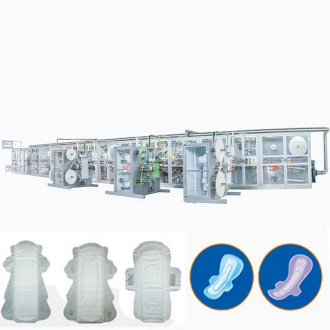
Choosing an adult diaper machine isn’t just about speed or price. It’s about what happens when a servo faults mid-shift, a material roll changes without notice, or a buyer asks for a size range your line wasn’t built to handle. That’s where the real difference between manufacturers shows up. In this post, we look at practical ways to evaluate reliable production equipment—what to inspect, what to ask, and which compromises tend to cost more later. Womeng has seen these purchase decisions up close, and the tips below reflect the details that matter most.
Where Build Quality Shows Up Before You Sign Anything
You can feel a home long before an inspector ever sets foot inside. Drawers that close with a soft, weighted glide, cabinet doors that meet without a shrug, a front door that swings on a solid-core hinge instead of slapping against the jamb — these are not extras, they are tells. Walk through any listing and let your hands do the reading. A builder who skimps on the hardware you touch every day almost certainly cut corners inside the walls you will never see.
Open the cabinet under the kitchen sink. You are not looking for a leak; you are looking at how the pipes pass through the cabinet floor. A clean escutcheon, a straight bead of caulk, no jagged cuts — these small finishes say more than a staged countertop. Then check the baseboard returns, the way tile edges disappear under trim, and whether painted lines at the ceiling hold steady. Visible intersections are where builders reveal whether they were racing to the closing table or building something meant to last.
Ask to see a home that is still under construction. If the salesperson hesitates, let that pause carry weight. On an unfinished frame, you can count fasteners, look at strapping, and see whether the vapor barrier is taped at the seams or just stapled in a few places. Build quality rarely hides in a brochure. It shows up in transitions, hardware choices, sheathing, and whether someone is willing to walk you through before the drywall goes up.
Why Real Throughput Rarely Matches the Brochure
Vendors love to quote peak numbers from a lab bench, but your office floor is not a clean RF chamber. Walls, furniture, and even the moisture in the air quietly shave off decibels. One concrete pillar can turn a 1,200 Mbps claim into a stutter. Real deployments face interference from neighboring networks, old client radios, and the simple physics of distance. The brochure assumes a single device sitting three meters from the router with no obstacles and no background noise.
Then there is the shared nature of the medium. Wi-Fi is half-duplex and collision-prone. Every smartphone, smart bulb, and laptop competes for the same airtime. Add a few video calls or a crowded apartment building, and the overhead from retries and management frames eats into raw data rates. The number on the box often reflects a theoretical maximum that ignores protocol overhead, encryption, and the fact that most clients only support two spatial streams, not the four the router advertises.
Finally, firmware and band steering play a quiet role. Routers may prioritize stability over speed, back off to 80 MHz channels instead of 160 MHz, or steer a device onto a less congested band. Those choices are sensible but reduce headline throughput. The gap between marketing numbers and everyday reality is not a defect; it is the difference between a wind tunnel test and driving on a highway with traffic, weather, and a radio playing.
Matching Equipment to the Adult Diaper Sizes You Actually Run
Facilities often stock a wide range of adult diaper sizes, but the real question is which ones actually move. If your daily usage skews heavily toward medium and large, then your storage racks, disposal bins, and changing tables should be configured around those dimensions, not the theoretical full spectrum. Oversized bins meant for XL products eat up floor space, while undersized compartments force staff to cram or fold products in ways that slow down each change. Write down your last three months of purchase orders and note the volumes per size—that data dictates the width of shelves, the depth of pull-out drawers, and even the height at which you place the most frequently grabbed items.
The same logic applies to portable carts used during night rounds or emergency changes. If a cart is packed with equal slots for every size but your facility goes through mostly one or two, you are wasting motion and reintroducing sorting at the point of care. Adjustable dividers sound nice in theory, but in practice they get shifted and ignored. Instead, build cart inserts around the two highest-volume sizes and leave one flexible slot for occasional outliers. This cuts restocking time and keeps the cart footprint smaller, which matters in narrow hallways and shared bathrooms.
Finally, match your disposal equipment to the actual weight and bulk of the products you use. A bin that holds forty small pads might only hold fifteen soaked large briefs before it becomes a lifting hazard. Measure the filled volume of your most common size after a typical change cycle, then choose liners and bins that can handle that load without overflowing between collection rounds. When equipment is sized to real usage rather than a generic product catalog, staff spend less time wrestling with supplies and more time on direct care.
Spare Parts and Service Questions Worth Asking Early
Many buyers leave parts and service talk until after the invoice is signed. That is usually the moment leverage disappears. Ask whether the supplier keeps local stock of the items that actually fail—seals, filters, boards, drive belts—not just the slow-moving castings. A polite but direct question about which parts are excluded from the standard kit often reveals more than a brochure ever will.
Service agreements can hide gaps. Instead of asking “do you offer support,” ask what happens on a Friday night when a critical sensor dies and the line is stopped. Will a technician travel on Saturday? Are remote diagnostics included, and does the warranty cover labor or only the replacement part? The answer that matters is the one with a time and a name attached.
Ask for a short list of common failure parts with real lead times. If the supplier hesitates to share that, treat it as useful information. Also check whether you can buy generic consumables without voiding coverage, because some contracts quietly lock you into branded parts at steep markups. Early clarity here can prevent the machine from becoming an expensive paperweight.
The Hidden Costs Hiding in Changeovers and Training
Changeovers rarely show up as a line item on the monthly report, but they quietly drain capacity in ways that fixed costs never do. Every minute spent resetting a line, recalibrating a machine, or waiting for the first good piece is a minute that cannot be sold. The real sting comes later, when rushed setups lead to small errors that only surface downstream, turning a ten-minute switch into an afternoon of rework no one budgeted for.
Training carries the same awkward math. A new operator might be officially “productive” after two weeks, yet the scrap rate tells a different story for the next two months. The gap between what someone can demonstrate in a controlled session and what they handle alone at 2 a.m. is where hidden cost lives. It shows up as slower cycle times, more frequent stops, and the quiet habit of asking a neighbor instead of trusting the written procedure.
Most plants treat these as unavoidable friction. The more useful view is to treat every changeover and every training plan as a process with its own yield curve, and then shorten that curve deliberately. Small changes compound: a setup cart stocked the night before, a training checklist that includes failure drills, a ten-minute debrief after every switch. None of it looks impressive on paper, but together they remove the kind of cost that never appears on an invoice.
Signs a Manufacturer Truly Understands Incontinence Products
A manufacturer who genuinely gets incontinence care doesn't lead with absorbency numbers or vague promises of dryness. They talk about skin health first because they know prolonged contact with moisture is what causes real damage, not the leak itself. Look for language around pH balance, breathable backsheets, and how quickly the surface wicks liquid away rather than simply locking it in a polymer core. If their product descriptions read like they've spent time with wound care nurses or dermatologists, you're on the right track.
Another tell is how they handle fit and body diversity. Real expertise shows up in the range of shapes, the placement of elastic gathers, and the acknowledgment that a seated waist measurement differs from a standing one. Instead of one-size-fits-most claims, they offer specific guidance on when to size up for nighttime use or how leg cuffs should sit in a wheelchair. That kind of nuance doesn't come from a generic factory spec sheet; it comes from testing with people who actually live with incontinence day to day.
Finally, pay attention to whether they treat odor control as an afterthought or as a science. Thoughtful manufacturers mention the difference between masking fragrance and neutralizing enzymes, and they consider how materials interact with urine over several hours, not just in a lab splash test. They might recommend a lighter product for daytime activity and a higher-capacity option for rest, explaining the trade-offs honestly instead of pretending one product does everything. That willingness to admit limits is usually a sign of deeper understanding.
FAQ
Ask whether the supplier actually designs the core modules in-house, such as SAP dosing, core forming, and waistband attachment. A credible maker should be able to walk you through past design changes and show real assembly or testing areas rather than only presenting a catalog.
Request a trial with your intended materials and measure the stable running speed, not the mechanical maximum. Watch how the line behaves during splices, brief stops, and restart after rejection because those events usually determine real daily output.
Adult diapers combine thin nonwovens, films, SAP, and elastic strands. If tension control or SAP dosing is not precise, you will see curling, misaligned cores, or dust accumulation that increases waste and downtime. Those ongoing losses can quickly exceed the lower purchase price.
Look for a platform that allows size changes and style variations without extensive rework. Ask about changeover time, shared modules for different product widths, and whether upgrades like adding a hook tape unit or a different core forming system can be done later.
Check whether the manufacturer has local service engineers or a proven partner network, what critical spare parts are stocked locally, and whether remote diagnostics are available. Request a sample list of common wear parts with realistic lead times before signing.
Define the exact materials, target speed, gram weight range, defect rate, and product measurements such as size tolerance and leakage performance. The line should run continuously for an agreed period and meet the stated yield or OEE before final payment is released.
It is not necessary for the machine builder to manufacture every component. What matters is that the supplier can integrate key control points such as SAP feeding, glue application, and tension loops with clear responsibility if something fails.
Compare energy and compressed air consumption, expected waste rates, changeover downtime, spare part prices, and consumables like glue, oil, and blades. Training time and calibration support also affect how long it takes the line to reach stable production.
Conclusion
Build quality rarely shows up on a cut sheet. It appears in the thickness of the side frames, the alignment of unwind stands, and whether the manufacturer routes wiring like the line is meant to run for ten years. Before you sign anything, ask to see a machine under load, not just a polished demo video. Real throughput almost never matches the brochure because those figures assume narrow products, ideal materials, and zero interruptions. If your production includes multiple adult diaper sizes and absorbency levels, pin down how long a changeover really takes from the last good piece to the next good piece. Check the parts that wear: ultrasonic horns, cutting rolls, tension controls, and heating elements. Spare parts pricing and lead times should be part of the conversation before the order is placed, not treated as an afterthought.
A manufacturer that truly understands incontinence products will ask about core placement, standing leg gathers, and how the product holds up overnight, rather than just talking about line speed. That knowledge usually shows up in equipment that handles thin pads and heavy overnight briefs without constant drift or adjustment. Training and support are hidden costs if they are not planned early. Ask what the first week after installation looks like, how operators are trained, and how quickly maintenance staff can get answers when something drifts out of spec. A reliable supplier will explain remote support, on-site response, and what parts you should stock from day one. The goal is not to buy a machine that works in a sales presentation but one that keeps running when your team is under real production pressure.
Contact Us
Contact Person: Jessie Lai
Email: [email protected]
Tel/WhatsApp: 86-188594442931
Website: https://www.wm-machinery.com