

Air Circuit Breaker Exporter Insights for Choosing Durable Power Protection Solutions
2026-09-12
Every industrial facility faces the silent threat of electrical overloads—until a robust air circuit breaker steps in. But not all breakers are built to last, and a wrong choice can lead to costly downtime. Drawing on real export experience, MOLDVOLT shares the durability insights that help you select power protection that won't let you down.
What Actually Determines an ACB's Lifespan in the Field
The real-world service life of an air circuit breaker rarely matches the neat numbers printed in catalogs. Field conditions, not factory tests, dictate how long the unit will keep tripping reliably. Dust, humidity, and temperature swings inside an electrical room slowly degrade insulation and pivot joints. A breaker installed in a climate-controlled switchgear lineup may sail past twenty years, while the same model in a coastal or chemical plant environment can show contact pitting and sluggish mechanisms within a decade. Routine thermal scans often reveal early warning signs before a catastrophic failure.
Mechanical wear is another silent killer. Every close-open cycle stresses the latch mechanisms, charging springs, and auxiliary contacts. Breakers that operate frequently as load-break switches accumulate fatigue much faster than those sitting in standby. Maintenance teams often overlook lubrication intervals, leading to increased friction and slower clearing times. The operating mechanism’s health directly influences whether the breaker will clear a fault at the designed speed or hesitate just long enough to cause upstream damage.
Electrical erosion of main contacts plays a central role too. Arc chutes can only handle so many fault interruptions before their plates erode and gas pressure builds unevenly. The severity of duty, not just the number of operations, leaves its mark. A breaker that has interrupted several near-rated short circuits may look fine externally but have deeply pitted contacts and weakened arc runners. Regular contact resistance measurements and visual inspection of arc chambers give a far better prediction of remaining life than counting years since installation.
Material Choices That Separate Reliable Exporters from the Rest
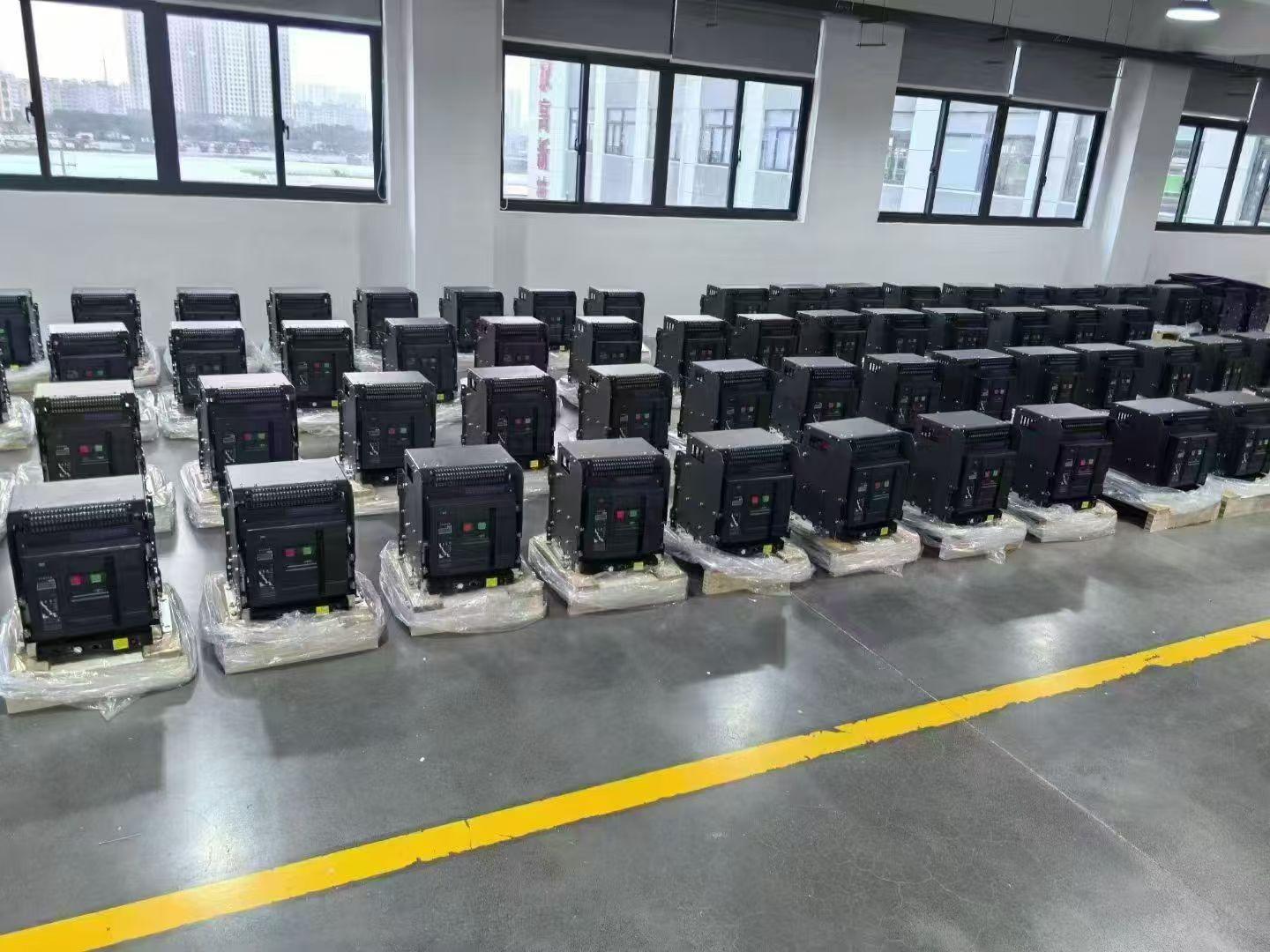
The difference often starts with something as simple as the grade of stainless steel underneath the polish. Reliable exporters don't just meet the minimum standard; they select alloys based on how the product will actually be used. A salt-spray test result on paper means little if the material has uneven chromium distribution or hidden inclusions that accelerate pitting in real coastal conditions.
Less dependable suppliers tend to substitute lower-cost alternatives when market prices shift, counting on the fact that most buyers won't detect the change until months later. The dependable ones keep a locked material fingerprint for every batch, traceable to the mill certificate and verified with a handheld spectrometer before any component moves to the cutting line. This habit isn't about ceremony—it's the only way to guarantee that the sample you approved is the product you receive.
What separates them further is their willingness to say no. When a client requests a material that won't survive the intended environment, a reliable exporter pushes back with data rather than quietly shipping the order. That single conversation can save both parties from a costly failure down the road.
Certification Claims Worth Scrutinizing Before You Buy
A certification label can make a product feel instantly trustworthy, but not every badge on the shelf has earned that trust. Terms like 'natural' or 'eco-safe' are essentially unregulated in many markets, which means a brand can slap them on almost anything. Before you hand over your money, check whether the claim is backed by an independent body with published standards—think USDA Organic, Fair Trade Certified, or Energy Star. And even then, look for a license number or expiry date, because outdated certifications do slip through.
One red flag that often gets overlooked is the self-issued certification. Some companies design their own official-looking seals—'Dermatologist Approved,' 'Clinically Proven,' or 'Pure Plant Formula'—without any outside verification. If you spot an unfamiliar logo, spend thirty seconds searching for who runs that certifying group. Is it a nonprofit with transparent audit results, or just a marketing department's invention? The most meaningful certifications usually come from organizations that publish their criteria and complaint records.
Scope matters more than most buyers realize. A product might carry a certification for one ingredient while the front label implies the whole bottle meets that standard. 'Made with organic lavender' doesn't mean the other 95% of the formula is organic. Don't hesitate to ask the brand for full certification documentation, not just the icon. If their response is vague, or they only show you a low-resolution certificate with no verifiable database entry, that's usually a sign the claim isn't worth much.
Customization Pitfalls That Lead to Premature Failure
Over-customization often starts with good intentions. A client demands a specific feature that seems simple, but the team rushes to implement it without mapping how the change interacts with existing modules. The result is a fragile system that works in the demo but collapses under real-world conditions.
One common trap is modifying the core platform instead of building an extension. When every tweak goes straight into the foundation, upgrades become impossible, and a single bad patch can take down the entire application. Testing is also skipped because custom work is perceived as low-risk, yet these hidden interdependencies are exactly where failures breed.
Teams that avoid these pitfalls treat customization as a design exercise, not a quick fix. They isolate changes behind clean interfaces, run regression tests after every change, and push back when a request threatens the stability of the whole system. Premature failure is rarely about one bad decision—it’s about a pattern of small, unchecked deviations.
Testing Methods That Reveal True Breaking Capacity
Most standard load tests only scratch the surface. They apply a steady, predictable force until something gives, but that rarely mirrors how materials fail in the real world. To uncover the actual breaking capacity of a component, you need methods that push beyond simple tension or compression. Think of it like checking a chain: pulling it slowly tells you the weakest link under ideal conditions, but jerking it, twisting it, or subjecting it to sudden shocks reveals flaws that static tests miss entirely.
One approach that consistently exposes hidden weaknesses is dynamic impact testing. Instead of a gradual increase in load, the sample gets hit with a rapid, high-energy blow. This simulates drops, crashes, or sudden overloads. For example, a carabiner might hold 25 kN in a slow pull, but a sharp fall from a few meters can generate forces that snap it at half that rating. Another method is cyclic fatigue testing, where the material is loaded and unloaded thousands of times well below its maximum. This reveals how micro-cracks grow and eventually cause failure at a fraction of the original breaking strength.
Then there's the often-overlooked environmental factor. A beam might break at 500 kg in a dry lab, but soak it in saltwater or chill it to -20°C, and that number drops dramatically. True breaking capacity isn't a single number etched in stone—it depends on speed, repetition, and surroundings. By combining impact, fatigue, and environmental stress testing, you get a far more honest picture of what a part can actually withstand before it fails in service.
After-Sales Support Signals Hidden in the Contract
Most buyers skim the warranty section and move on, but the real story about after-sales support lives in the fine print. Look for phrases like "reasonable efforts," "at our discretion," or "subject to availability" — these are quiet escape hatches that let a vendor scale back help when things go wrong. A contract that spells out specific response times, named support contacts, and guaranteed spare parts availability signals a partner who expects to be on the hook.
Another overlooked signal is how the agreement handles end-of-life or product discontinuation. If the vendor promises advance notice and continued support for a defined period, that suggests discipline and respect for your operational lifecycle. Conversely, a lack of any obligation to keep firmware updates flowing or to maintain compatibility after a sale often predicts a costly forced upgrade down the line.
Smart procurement teams also check whether training, documentation, and remote diagnostics are included as contractual deliverables rather than "available upon request." The difference between a loose promise and a line item with due dates and named owners is where after-sales support either becomes real or evaporates.
FAQ
Focus on the exporter’s manufacturing traceability and actual test data rather than glossy brochures. Ask for batch-specific type-test reports, temperature rise curves, and endurance test cycles. A supplier that openly shares failure analysis from field returns tends to be more dependable than one that only quotes standards.
Look beyond IP ratings. For humid or coastal regions, require verification of conformal coating on control boards and corrosion-resistant plating on busbars. Also check whether the breaker's tripping curve remains stable under wide temperature swings; some units drift more than datasheets suggest.
IEC 60947-2 is the baseline, but it shouldn't be the only filter. For many destinations, local marks like CCC, EAC, or INMETRO affect clearance. More useful signals are third-party witnessed short-circuit tests and ongoing factory surveillance, not just a certificate scanned from years ago.
Mechanical endurance under frequent switching is often underestimated. Users focus on interrupting capacity but ignore contact wear, spring fatigue, and motor operator duty cycles. Request a Weibull analysis of operating mechanism components if possible; it reveals more than a mean time to failure number.
Ask for the original oscillograms from the short-circuit test, not just the summary certificate. Also verify that the tested configuration matches the purchased model—same current rating, same accessories, same enclosure. Mismatched test setups are a common way inflated ratings slip through.
Define the exact ambient conditions, allowable voltage unbalance, and maintenance intervals in writing. Specify that warranty covers trip unit calibration drift beyond a stated percentage, not just catastrophic failure. Also agree on response time for replacement parts and who bears freight for warranty returns.
Only if the facility already uses a maintenance system that can act on the data. A breaker that reports contact wear and load trends saves money when someone actually schedules intervention. Otherwise the communication module adds failure points without operational benefit.
Watch for frequent model changes without backward compatibility, vague answers about legacy part stock, or reliance on a single casting supplier. Ask for a written commitment on spare parts availability after model discontinuation, ideally 10 years or more, and test their service desk with a realistic technical query before signing.
Conclusion
When evaluating air circuit breaker exporters, the difference between a unit that lasts a decade and one that fails in two years often comes down to factors rarely visible on a datasheet. Field lifespan hinges on how well the breaker handles thermal cycling, humidity, and frequent mechanical operations—not just its rated current. The alloys used in contacts and arc chambers tell you more about an exporter's priorities than any brochure. Look closely at whether silver-tungsten contacts are actually specified, or if the supplier quietly substitutes cheaper copper blends. Certification marks deserve scrutiny too: a valid IEC 60947-2 test report from an accredited lab is far more meaningful than a logo stamped on the nameplate. Customization is another trap; modifying trip settings or adding communication modules without revalidating coordination can introduce hidden weak points that only appear during a real fault.
Genuine breaking capacity emerges only through realistic type tests—short-circuit tests at the stated voltage, power factor, and X/R ratio. Ask for oscillograms and temperature rise data rather than polished summary sheets. Even the most honest exporter can stumble if the contract lacks clear after-sales commitments. Pay attention to whether spares pricing is locked for years, whether local technical support is named, and whether emergency response times carry penalties. A supplier's willingness to share test waveforms and maintenance logs before you sign is often a stronger predictor of long-term reliability than the warranty period alone. Durable power protection comes from aligning material integrity, transparent testing, and contractual accountability—not from chasing the lowest bid.
Contact Us
Contact Person: Hellen
Email: [email protected]
Tel/WhatsApp: 86-13634205622
Website: https://www.voltcabinet.com