

Aluminum Gravity Parts Factory: Your Guide to Superior Casting Quality
2026-07-10
Welcome to the definitive guide on aluminum gravity casting, where quality meets precision. Whether you're exploring cost-effective production or seeking components with exceptional structural integrity, the process demands expertise. In this article, we'll uncover the secrets behind achieving flawless cast parts, from mold design to alloy selection. At the heart of it all, DDR stands as a benchmark for reliability. Ready to elevate your project? Let's dive in.
Why Gravity Casting Defines Precision in Aluminum Parts
Gravity casting relies on the steady, unforced flow of molten aluminum into a mold, allowing the metal to settle naturally without turbulence. This gentle filling minimizes trapped air and oxide inclusions, two common culprits behind porosity and weak spots. As a result, the internal structure of the part stays dense and uniform, giving it a level of dimensional stability and repeatability that high-pressure methods often struggle to match. The slower pace isn’t a drawback—it’s a deliberate advantage that lets thin walls and intricate features form with crisp definition straight out of the mold.
Unlike processes that force metal under intense pressure, gravity casting doesn’t impose internal stresses that can warp a part during cooling or later machining. The alloy cools at a more predictable rate, so grain structures develop evenly, boosting both surface finish and mechanical properties. Manufacturers lean on it for components where millimeters matter—housings, brackets, and structural elements—because the as-cast accuracy reduces the need for extensive post-processing. It’s a technique that favors consistency over speed, yet still delivers precision that holds up under tight engineering tolerances.
There’s also an underappreciated synergy between gravity casting and tooling design. Molds can be engineered with chills and risers that direct solidification precisely where needed, refining detail without complicating the cycle. This level of control turns each pour into a repeatable recipe for near-net shapes, cutting waste and keeping costs in check without sacrificing quality. It’s why aluminum parts from gravity casting often emerge with a built-in integrity that feels deliberate, not just achieved—a quiet hallmark of a process that defines precision through physics rather than brute force.
How Our Molding Process Eliminates Common Casting Flaws
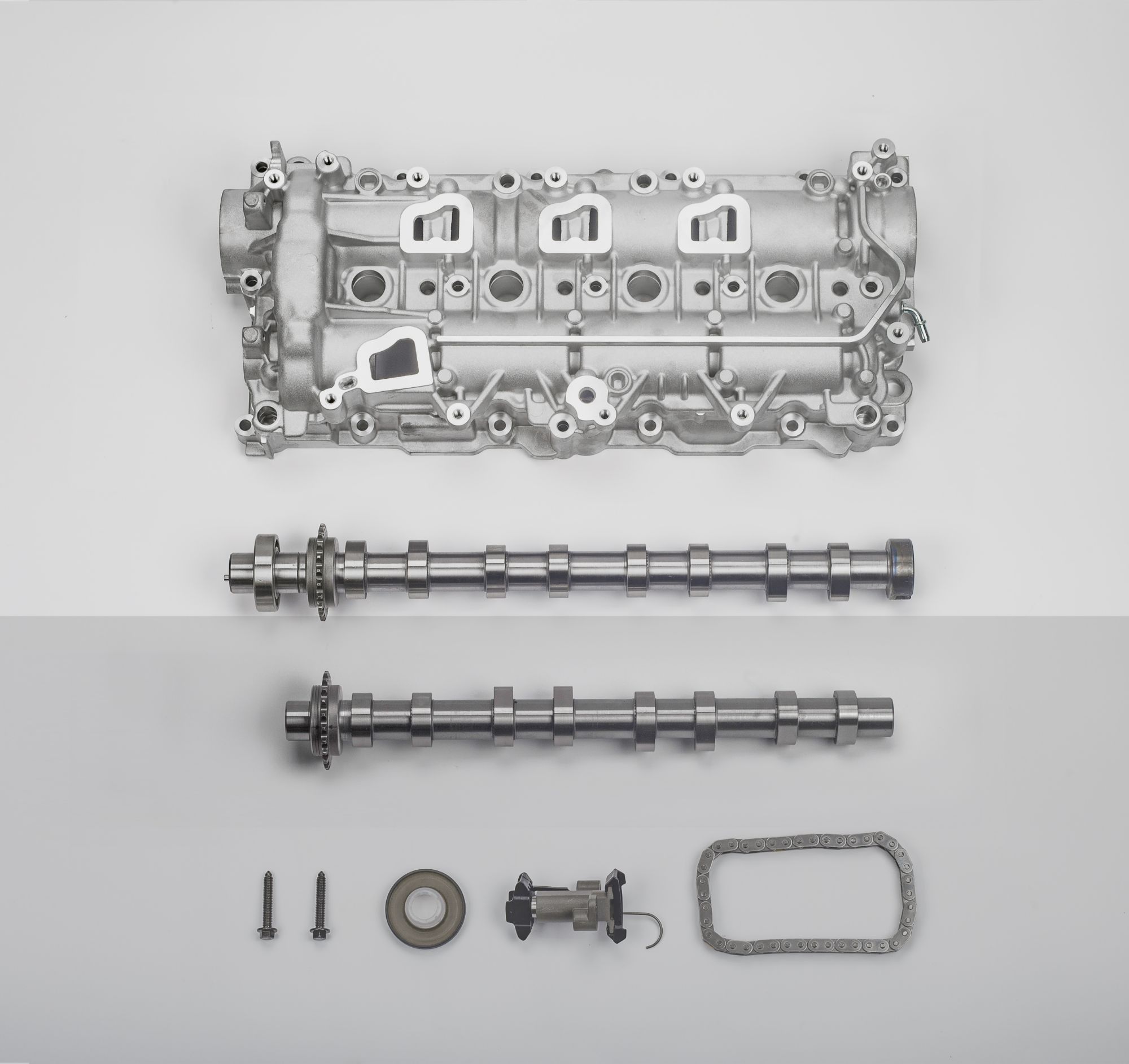
Casting flaws like porosity, shrinkage, or surface irregularities often come down to one thing: inconsistent material flow and cooling. Our molding process addresses this head-on by using a precision-controlled injection system that maintains uniform pressure and temperature throughout the entire cycle. Instead of relying on guesswork or outdated hydraulic systems, we’ve integrated real-time sensors that monitor viscosity, fill speed, and cavity pressure. This data feeds into adaptive controls that make micro-adjustments on the fly, ensuring that the molten material reaches every contour of the mold evenly, even with complex geometries. The result is a part that emerges with a dense, consistent internal structure and a surface that requires little to no post-processing.
Another common culprit behind casting defects is trapped air or gas, which can create voids or blemishes. Our tooling design incorporates strategically placed venting channels that allow gases to escape without disrupting the material flow. Unlike conventional vents that can clog or become less effective over time, these channels are engineered with a self-cleaning geometry that maintains optimal performance over thousands of cycles. We also use a timed compression stage that compacts the material just before it solidifies, squeezing out any residual gas pockets and minimizing microscopic porosity. This two-pronged approach—active venting plus mechanical compaction—virtually eliminates internal defects that would otherwise compromise strength or aesthetics.
Finally, we’ve eliminated the thermal imbalances that typically cause warping or dimensional inaccuracies. Our molds feature conformal cooling circuits that follow the exact contours of the part, unlike traditional straight-drilled lines. By circulating temperature-controlled fluid through these intricate channels, we extract heat uniformly, preventing hot spots that lead to uneven shrinkage. The entire process is tied together by a closed-loop system that correlates cooling rates with part geometry, so even parts with varying wall thicknesses solidify evenly. What you get is a component that not only looks cleaner but also holds tighter tolerances right out of the mold—no straightening steps, no secondary machining to correct distortions.
Material Selection: Matching Aluminum Alloys to Real-World Demands
Selecting the right aluminum alloy isn’t just about tensile strength or corrosion resistance on a datasheet. It’s about understanding how the material will behave in the messy, unpredictable conditions of the real world—whether that’s a bicycle frame rattling over cobblestones or a marine fitting bathed in salt spray. The challenge lies in balancing mechanical properties with the specific demands of the application, because an alloy that excels in a controlled lab might falter when faced with cyclic loading, temperature swings, or unexpected chemical exposure.
Take the 6000 series, for example. These heat-treatable alloys, alloyed with magnesium and silicon, offer a sweet spot of strength, formability, and weldability that makes them a go-to choice for structural components. But within that family, the subtle differences between 6061 and 6063 can make or break a project. 6061 provides higher strength for load-bearing parts in trucks and bridges, while 6063’s superior surface finish and extrudability make it ideal for architectural trim. The trick is to match the alloy’s personality to the job: some excel under static loads, others thrive when fatigue resistance is paramount.
Then there’s the often-overlooked role of temper designations. A 7075-T6 plate might seem like the ultimate choice for high-stress aerospace components, but its susceptibility to stress corrosion cracking in certain environments could spell disaster if not accounted for. Switching to a T73 temper sacrifices a bit of peak strength but dramatically improves durability in corrosive settings. It’s a constant trade-off, and the best material selection process treats aluminum alloys not as a one-size-fits-all solution, but as a library of options where every grade and temper tells a different story of performance under real-world constraints.
Inside the Quality Checks That Go Beyond Standard Testing
Standard testing often serves as a baseline, confirming that a product meets minimum requirements under ideal conditions. But real-world usage introduces variables that lab environments rarely replicate. That’s why our approach extends far beyond ticking boxes on a checklist. We simulate the unpredictable—temperature swings, prolonged stress, erratic handling—to uncover weaknesses that conventional inspections might miss. This isn't about passing a test; it's about understanding how a product truly behaves when pushed to its limits, and then refining it until it excels.
One layer of our extended quality checks involves scenario-based evaluations that mirror genuine user interactions. Instead of just measuring whether a hinge can open and close 10,000 times, we examine how it feels on day 500—does it still move smoothly or begin to loosen? We replicate years of wear in a matter of days through accelerated life testing, but with a twist: we introduce irregular intervals and pauses to mimic the fits and starts of daily life. Sensors and high-speed cameras capture microscopic changes, giving our engineers a story, not just a pass/fail result. Every subtle noise, vibration, or deviation becomes a clue that sharpens the final product.
From Prototype to Production: Scaling Without Compromise
Moving from a working prototype to a fully scaled production system often feels like navigating a minefield. The early excitement of a proof-of-concept can quickly give way to sleepless nights as the realities of load, reliability, and real-world chaos set in. Many teams fall into the trap of believing that the architecture that served them well during the demo phase will naturally hold up when user counts multiply overnight. The hard truth is that the shortcuts and “temporary” fixes that speed up prototyping inevitably become the bottlenecks that undermine performance at scale. True scaling without compromise means accepting that what got you here won't get you there, and being ready to refactor core assumptions before they turn into production fires.
A common mistake is treating scalability as a purely technical challenge to be solved with more hardware or a few configuration tweaks. In reality, it's a design philosophy that must permeate every decision—from database schema choices to how error handling is implemented. For instance, a prototype might rely on synchronous, tightly coupled services that work fine with a handful of requests per second, but under load they create cascading latency and obscure failure modes that are almost impossible to debug. Shifting to a more resilient approach, such as embracing eventual consistency where appropriate and designing for partial failures from day one, can mean the difference between a graceful degradation and a complete system meltdown when traffic spikes.
Perhaps the most overlooked aspect of scaling without compromise is the human element. Processes that feel lightweight and agile for a small team can become a tangled mess when you've got dozens of contributors merging changes. Without deliberate effort to maintain coding standards, comprehensive monitoring, and a culture of production readiness, early speed inevitably turns into late-stage paralysis. The teams that scale smoothest are those that invest in observability as early as possible, treating logs and metrics not as optional add-ons but as first-class features of the system. They understand that visibility into the system's behavior is what allows them to move fast without breaking things—because when something does break, they're not hunting blind.
The Quiet Cost Advantages of a Specialized Foundry
Specialized foundries operate with a kind of industrial clarity that vertically integrated manufacturers often struggle to match. By focusing solely on fabrication, they strip away the distractions of chip design and end-product marketing, directing every resource toward refining the production process itself. This singular goal translates into deeply optimized workflows, where equipment uptime, material utilization, and yield management become second nature rather than aspirational targets. The result is a cost structure that isn’t just lean on paper—it’s baked into the daily rhythm of the facility, quietly lowering expenses without calling attention to itself.
There’s also an overlooked financial benefit that comes from shared learning across diverse client portfolios. A specialized foundry works with dozens of chip architects, each pushing different boundaries in power, performance, and miniaturization. Lessons from one project often unlock efficiencies in another, spreading the cost of innovation across multiple customers without any single one bearing the full brunt. This cross-pollination reduces trial-and-error waste, shortens yield ramp-up phases, and naturally suppresses per-unit costs. It’s an invisible advantage that in-house fabs—shackled to a single design philosophy—can rarely replicate.
Finally, the ability to scale with surgical precision sets specialized foundries apart. When demand surges, they don’t need to build speculative capacity or gamble on market forecasts; they already run high-volume lines that can flex around aggregated orders. That elasticity means fixed costs are diluted over a larger output base, and customers avoid paying for idle equipment. Meanwhile, dedicated R&D cadres obsess over incremental improvements—a tighter transistor here, a more efficient etch step there—that compound into meaningful cost reductions without fanfare. In an industry obsessed with grand technological leaps, it’s these quiet, compounding advantages that often tip the balance in the long run.
FAQ
It’s a process where molten aluminum is poured into a mold using gravity alone, without applying pressure or vacuum. The metal fills the cavity from the bottom up, often using a runner system, and solidifies into the desired shape. It’s simpler than high-pressure die casting and works well for thicker parts with complex internal geometries.
Compared to die casting, gravity casting yields parts with higher density and better mechanical properties because the slower fill reduces turbulence and porosity. Against sand casting, it provides tighter tolerances and smoother surface finishes. Each method has its place, but gravity casting hits a sweet spot for medium-to-high volume production where strength and integrity matter.
Look for a factory that uses advanced simulation software to predict flow and solidification, has rigorous melt-quality controls (like degassing and filtration), and maintains precision tooling. Also, check their in-house testing capabilities—spectroscopy for alloy chemistry, X-ray or CT for internal soundness, and dimensional inspection. A clean, organized shop floor is a good sign too.
A356 is very popular because it offers a great mix of castability, strength, and ductility after heat treatment. Other alloys like A357 (higher purity), or 319 (for better machinability) are used depending on the application. The choice hinges on what the part needs: corrosion resistance, wear resistance, or thermal conductivity.
Ask for sample parts and full inspection reports. Check the consistency of mechanical properties across multiple castings. A reliable factory will also offer process capability data (Cpk) for critical dimensions. Don’t just trust the glossy website—visit if you can, and watch how they handle scrap and rework.
Shrinkage porosity is common if the gating and risers aren’t designed right; computer simulation fixes that. Gas porosity comes from hydrogen in the melt, so rotary degassing is essential. Inclusions can be minimized with proper filtration and clean melting practices. A good factory will also monitor mold temperatures and coating thickness to avoid misruns or cold shuts.
Heat treatment (T6, T7) enhances strength and ductility. Trimming and shot blasting clean up the part surface. For precision-critical parts, CNC machining finishes mating surfaces and tolerances. Impregnation can seal porosity if needed. Each step adds value and reliability.
Conclusion
At the core of aluminum gravity casting lies a precision that cold machine work can never replicate. By relying on the natural force of gravity to fill molds, the process achieves an unmatched uniformity in grain structure, virtually eliminating the micro-porosities and turbulence that plague high-pressure methods. This means every part—from engine brackets to intricate pump housings—emerges with tighter dimensional control and a surface readiness that slashes secondary finishing. It’s not simply about making parts lighter; it’s about engineering them to endure real-world thermal cycling and mechanical loads without the hidden flaws that lead to premature field failures.
What sets a specialized foundry apart isn’t just the pour. It starts with alloy intelligence: matching the right blend of aluminum-silicon or aluminum-magnesium to the exact fusing of tensile strength, corrosion resistance, and thermal conductivity your application demands. Then, mold design takes over—venting, chill placement, and coating recipes are tuned to erase shrinkage tears before they form. Quality gates extend far beyond standard spectrographic checks; in-process digital radiography and cross-sectioning catch defects invisible to the naked eye. When prototype evolves to full-scale production, that same rigor scales, because the process parameters, not just the blueprints, are the true intellectual property. The result is a quiet cost advantage: reduced scrap, minimal machine hours, and a single-part flow that makes complexity affordable. This is gravity casting as it should be—a deliberate, observant, and fiercely consistent craft.
Contact Us
Contact Person: Shelly
Email: [email protected]
Tel/WhatsApp: 8613967667688
Website: https://www.yongyu.com/