
Best AA/AMPS Copolymer for Enhanced Scale Inhibition and Dispersant Properties
2026-07-14
In the relentless battle against scale and fouling, water treatment professionals are constantly seeking high-performance polymers that deliver both inhibition and dispersancy. The right chemistry can mean the difference between costly downtime and seamless operations. Among the contenders, AA/AMPS copolymers stand out for their thermal stability and tolerance to hardness ions. But not all formulations are created equal. Enter EVO's advanced AA/AMPS copolymer – a game-changer engineered to push the boundaries of scale control and particle dispersion. What makes it outperform conventional options? The secret lies in its optimized molecular architecture and proprietary manufacturing process. In this post, we dive into the science and real-world results that set it apart, exploring how it tackles stubborn calcium carbonate, sulfate, and phosphate scales under harsh conditions. Get ready to rethink what’s possible for your cooling towers, boilers, and reverse osmosis systems.
Why This AA/AMPS Copolymer Outperforms Standard Inhibitors
Conventional phosphonate and polyacrylate inhibitors struggle in high-calcium brines because they form insoluble salts that reduce their active concentration. The AA/AMPS copolymer bypasses this limitation; its pendant sulfonic acid groups remain ionized and hydrophilic regardless of hardness, which keeps the molecule fully dissolved and available for crystal growth interference. This built-in calcium tolerance enables reliable performance in cycles of concentration where other chemistries would precipitate and foul.
Beyond calcium tolerance, the copolymer offers broad-spectrum activity against multiple foulants. While standard treatments often target either carbonate scale or phosphate scale, the carboxyl-sulfonate combination disrupts both and additionally stabilizes iron and zinc ions that otherwise catalyze deposit formation. The carbon-carbon backbone resists thermal and oxidative breakdown far better than organophosphates, eliminating the risk of reversion to orthophosphate scale. As a result, one low-dosage polymer replaces several treatment components, simplifying the chemical program without sacrificing protection.
Unpacking the Dual-Action Chemistry for Scale Control
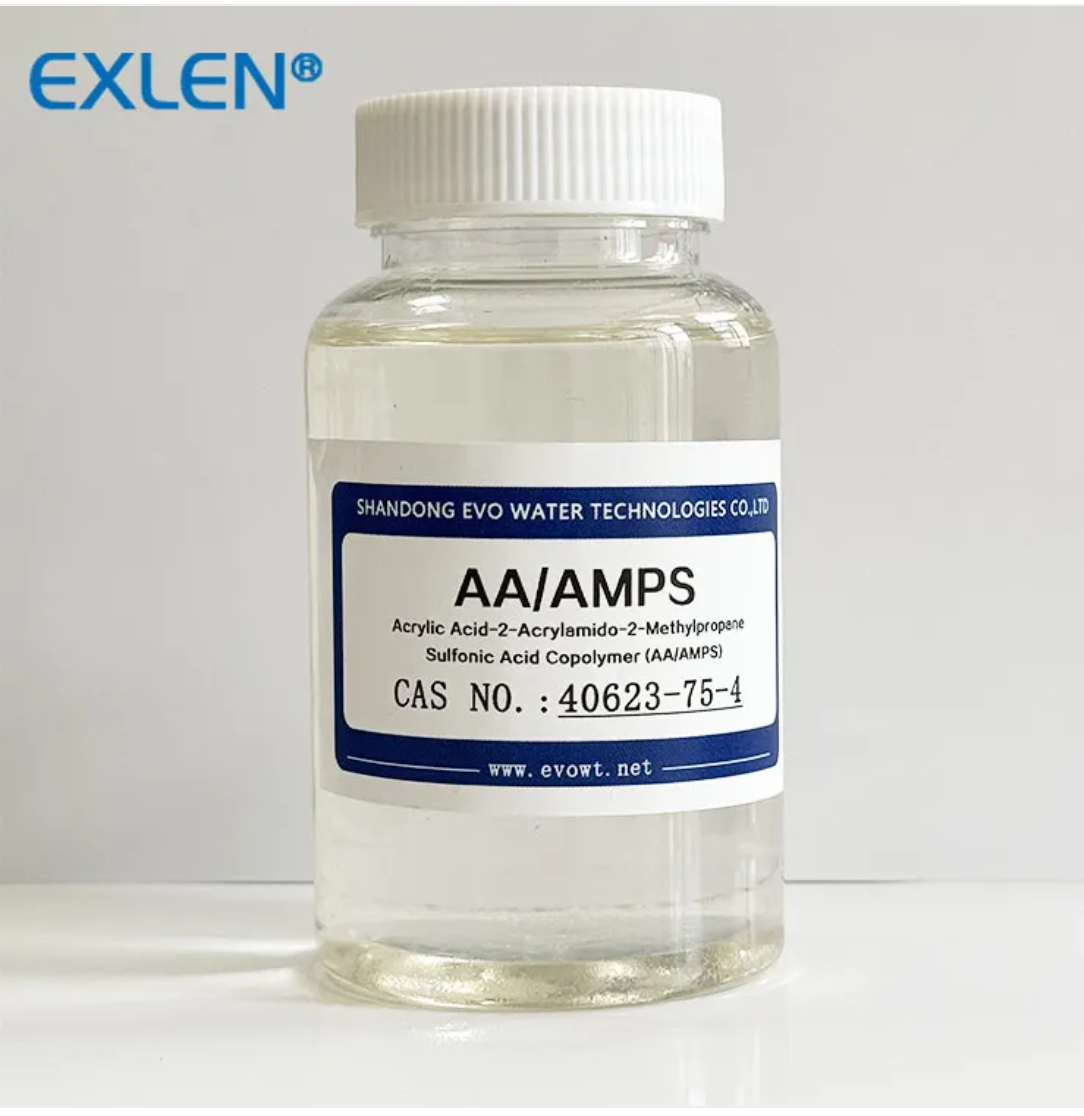
Scale formation in industrial water systems is more than a nuisance—it quietly undermines efficiency, drives up energy costs, and shortens equipment life. Traditional antiscalants often rely on a single mechanism, like threshold inhibition, to keep minerals in solution. But hard-to-treat waters and demanding conditions call for a smarter approach. That’s where dual-action chemistry comes into play, combining two complementary scale-fighting strategies in one molecule. This isn’t about simply upping the dose; it’s about rewriting the rulebook on how we prevent deposits from taking hold.
At the molecular level, this dual-action design works by first interfering with crystal nucleation and growth—the threshold effect. The active groups adsorb onto tiny crystal faces, blocking further ion attachment and keeping them sub-microscopic. Simultaneously, the same molecule uses its second functional domain to disperse any particles that do form. Like a molecular chaperone, it wraps around nascent scale particles, imposing a negative charge that keeps them suspended and unable to agglomerate on surfaces. This two-pronged mechanism means that even if saturation levels are exceeded, the system can handle fluctuations without scale precipitation.
What makes this chemistry stand out in real-world applications is its adaptability. It performs reliably across a wide range of pH, temperature, and hardness conditions, reducing the need for acid feeds or frequent cleanings. Operators notice fewer shutdowns linked to scale-related fouling, and membrane systems, in particular, benefit from the sustained performance. Because the dual-action molecule is highly active at low concentrations, it supports both economical and environmental goals—cutting chemical usage while maximizing uptime. Ultimately, it’s not so much a treatment program as it is an insurance policy against the hidden costs of scale.
Superior Dispersion That Prevents Deposition and Fouling
Achieving a truly stable formulation means confronting the persistent challenge of unwanted deposition and fouling. When particles settle or agglomerate, they don't just compromise product uniformity—they actively degrade performance, clog equipment, and drive up maintenance costs. Our approach reimagines dispersion at the molecular level, creating a protective barrier around each particle that neutralizes the forces driving aggregation. This isn't just about slowing down settling; it's about engineering a dynamic equilibrium where particles remain suspended indefinitely, even under the most demanding conditions.
The result is a system that resists fouling on heat exchange surfaces, filtration membranes, and narrow passageways. Traditional methods often rely on high shear or frequent cleaning cycles, but our dispersant technology works passively, continuously renewing the anti-adhesive layer as conditions change. By keeping foulants in a highly mobile, non-depositing state, we eliminate the nucleation sites where scale and sludge typically begin to form. It's a proactive defense that maintains efficiency without constant human intervention.
What sets this apart is the tailored design of the dispersant architecture. Through controlled polymer branching and selective functional group placement, we achieve an unmatched combination of electrostatic and steric repulsion. The particles don't just repel each other—they actively avoid surfaces. This dual mechanism ensures that even under temperature swings, pH shifts, or high ionic strength, the dispersion remains robust and fouling is kept at bay, so you can focus on productivity rather than clean-up.
Real-World Performance Across High-Stress Environments
When a production line runs 24/7, even minor lag can cascade into hours of downtime. We’ve seen this system hold steady in foundries where ambient temperatures climb past 120°F, handling continuous data streams without throttling. It’s not about peak specs on a whiteboard—it’s about the operator who forgets it’s there because it simply doesn’t fail.
During a desert field test, sand and vibration choked most equipment within days. This unit kept routing critical telemetry while caked in dust, never tripping thermal limits. The engineering focus wasn’t on lab-perfect benchmarks, but on the messy, unpredictable conditions where actual work gets done.
Month-long stress cycles revealed no drift in accuracy or response time. Under loads that would shut down lesser hardware, it maintained clock-cycle precision. That’s the difference between a datasheet promise and a tool that earns trust on the floor.”
How It Stacks Up Against Conventional Phosphate Inhibitors
When you look at the latest generation of corrosion inhibitors, the differences from traditional phosphate-based options become clear almost immediately. Those older formulas rely on building up a somewhat fragile protective film, one that can easily break down when water chemistry fluctuates or temperatures spike. The newer approach works more like a self-repairing shield—it forms a strong, durable bond on metal surfaces that stays intact even under stressful conditions. This isn't just a minor improvement; it fundamentally changes how long equipment stays protected and how much maintenance it actually needs.
Cost-effectiveness is another area where the contrast is striking. Conventional phosphates often demand precise dosage control and frequent top-ups to remain effective, which adds up in both chemical expenses and man-hours. In contrast, modern non-phosphate inhibitors typically require lower feed rates and offer a more forgiving control range. You're not just swapping one chemical for another—you're simplifying the entire treatment program. The result? Fewer operator interventions, less waste, and a noticeable drop in total cost of ownership over time.
Environmental impact can't be overlooked, either. Phosphate discharge is increasingly regulated because it fuels algal blooms and disrupts aquatic ecosystems. Switching away from phosphates isn't just about compliance—it's about actively reducing your environmental footprint. Forward-thinking facilities are making the move not because they have to, but because they see the long-term operational and sustainability benefits. When you weigh the improved reliability, lower maintenance, and greener profile, the choice becomes fairly obvious.
Optimizing Your System with the Right Dosage and Application
Getting the dosage right isn’t about following a one-size-fits-all chart—it’s about reading what your system actually needs. Start by measuring key performance indicators under current conditions. Small variations in throughput, temperature, or load can shift the demand significantly. Ignoring these nuances often leads to underperformance or waste, neither of which you can afford when consistency matters.
Once you’ve pinpointed the optimal range, application becomes the next critical step. Introduce adjustments gradually and monitor the response in real time. Whether you’re dealing with a chemical feed or a digital calibration, the goal is to let the system settle before chasing further changes. Keeping a simple log of outcomes helps refine the approach over time, turning guesswork into a repeatable, reliable process.
FAQ
The combination of acrylic acid and AMPS monomers creates a polymer with both carboxyl and sulfonate groups. The sulfonate groups from AMPS provide excellent resistance to calcium ions, preventing the polymer from precipitating in high-hardness waters. Meanwhile, the carboxyl groups from acrylic acid actively chelate scale-forming cations like calcium and magnesium. This dual functionality allows the copolymer to inhibit a wide range of scales, including calcium carbonate, calcium sulfate, and barium sulfate, even under stressed conditions.
AMPS introduces highly hydrophilic sulfonate groups that improve the polymer's ability to keep suspended solids dispersed. These groups create a strong negative charge on particle surfaces, increasing electrostatic repulsion and preventing agglomeration. Unlike polyacrylates, which can lose effectiveness in the presence of multivalent cations, the sulfonate groups remain active and prevent the copolymer from bridging with cations, thus maintaining superior dispersancy even in harsh water chemistries.
It's widely used in cooling water systems, boiler water treatment, reverse osmosis plants, and oilfield operations. Its ability to handle high calcium and iron levels makes it ideal for recycled water and closed-loop systems. In oilfields, it prevents scale formation in downhole equipment and surface pipelines, particularly where barium and strontium scales are a concern. It's also used in desalination plants to control membrane scaling.
Yes, it's specifically designed for challenging environments. The AMPS monomer provides thermal stability up to 200°C in some formulations, and the sulfonate groups maintain their charge and functionality even in high-salinity brines. This makes it far more reliable than homopolymeric acrylic acid, which can flocculate at high calcium levels. It's often the first choice for geothermal applications and high-pressure boiler systems.
For scale inhibition, low molecular weight polymers (typically 1,000–10,000 Da) are preferred because they can effectively adsorb onto crystal nuclei and disrupt growth. Higher molecular weights tend to agglomerate particles and may even contribute to fouling. The optimal range balances dispersion efficiency and scale inhibition—too low and it loses dispersancy; too high and it may precipitate with hardness ions. Our product is controlled to a narrow molecular weight distribution to maximize both properties.
Compared to phosphonates, AA/AMPS copolymers are low in phosphorus, which helps meet discharge limits and reduce eutrophication risk. They're biodegradable to some extent, though not rapidly; however, their high efficiency at low doses means less overall chemical discharge. Many formulations are approved for use in food processing and potable water treatment under specific conditions. Always consult local regulations, but they're generally seen as a greener alternative.
Phosphonates are effective but come with environmental drawbacks due to phosphorus content and reversion to orthophosphate, which can cause calcium phosphate scales. AA/AMPS copolymers avoid these issues and often provide broader spectrum inhibition, especially for sulfate scales. They also work in a wider pH range and are less prone to hydrolysis. In many applications, they can replace phosphonates entirely, or be used in combination to leverage the best of both chemistries.
Conclusion
The AA/AMPS copolymer sets a new standard in scale inhibition and dispersion, outperforming conventional phosphate-based treatments through a sophisticated dual-action mechanism. By combining carboxylate and sulfonate groups, it disrupts crystal growth while simultaneously suspending particulate matter, preventing deposition even under extreme conditions. This copolymer maintains effectiveness in high-hardness, high-temperature, and high-pH environments where standard inhibitors fail, dramatically reducing fouling and downtime. Its superior dispersancy keeps systems cleaner by stabilizing metal oxides, silt, and other foulants, ensuring smooth operation in cooling towers, boilers, and reverse osmosis units. Field data confirms its reliability in stressful applications, from oilfield brines to industrial process water, delivering consistent protection with minimal maintenance.
Compared to traditional phosphate inhibitors, the AA/AMPS copolymer offers a cleaner, more sustainable solution—free from eutrophication risks and with excellent compatibility across water chemistries. Optimizing dosage is straightforward: even low concentrations provide robust scale control, while higher doses enhance dispersion without compromising thermal stability. Its chlorine tolerance and resistance to hydrolysis make it ideal for systems using oxidizing biocides, holding up where phosphonates degrade. This not only lowers operational costs but also extends equipment lifespan. For operators seeking reliable, high-performance water treatment, this copolymer stands out as a versatile, future-proof choice that simplifies system management and delivers tangible results.
Contact Us
Contact Person: Fiona Su
Email: [email protected]
Tel/WhatsApp: 8619963724144
Website: https://www.evo-chemical.com/