
Best AA/AMPS Copolymer for Scale Inhibition and Industrial Water Treatment
2026-08-14
Scaling and corrosion constantly threaten the efficiency of industrial water systems, driving operators to seek more reliable chemical solutions. Among the many dispersants and inhibitors available, the best AA/AMPS copolymer stands out for its exceptional ability to control calcium carbonate, calcium sulfate, and other stubborn scales under harsh conditions. But not all copolymers perform the same—formulation quality, monomer ratio, and molecular weight make a dramatic difference. This is where EVO has focused its expertise, developing high-performance AA/AMPS products tuned for real-world cooling towers, boilers, and reverse osmosis systems. If you are tired of short-lived treatments and inconsistent results, this guide will break down what truly matters and how to pick a copolymer that delivers long-term protection.
The Copolymer That Keeps Heat Exchangers Free of Calcium Carbonate
Scale buildup from calcium carbonate is one of the most persistent headaches in industrial cooling systems. As water circulates through heat exchangers, dissolved minerals precipitate onto metal surfaces, forming a hard layer that gradually chokes thermal transfer. Left unchecked, the deposit forces pumps to work harder and can eventually shut down an entire line for costly mechanical cleaning. Traditional inhibitors often rely on heavy phosphates or acid dosing, but a different approach has gained ground: specialized copolymers tailored to keep calcium carbonate from ever gaining a foothold.
These copolymers typically combine carboxylic acid groups with sulfonate or amide segments, giving them a dual grip on the scaling process. The acidic moieties latch onto nascent calcium carbonate crystals, disrupting their orderly growth so they stay small and oddly shaped instead of merging into a rigid crust. Meanwhile, the sulfonate portion boosts solubility in hard water and helps the polymer remain effective even when iron or silica is present. As a result, the tiny crystals stay suspended in the bulk flow rather than settling on heat transfer surfaces, and any that do touch the wall are easily rinsed away.
What makes this copolymer route stand out is its tolerance for high hardness and alkalinity without the environmental baggage of phosphate-based programs. Operators report longer runs between cleanings and measurably higher heat exchange coefficients after switching. Rather than simply masking the symptom, the polymer works at the crystal level, preventing the dense, tenacious scale that would otherwise rob a system of its efficiency.
Why Sulfonate Groups Matter More Than You Think for Scale Control
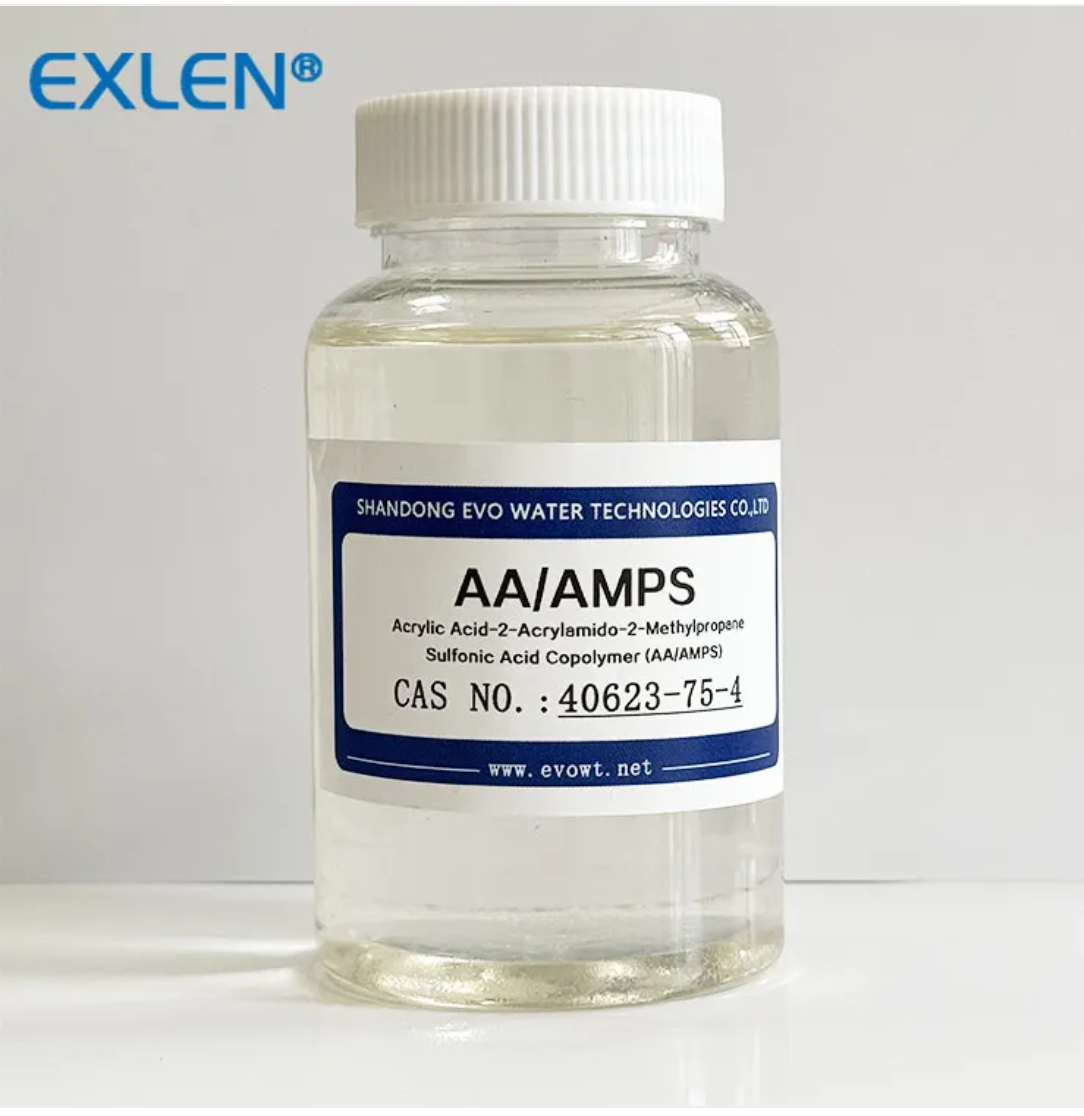
Sulfonate groups rarely get the attention they deserve in scale inhibition, yet their ability to keep stubborn calcium sulfate, barium sulfate, and phosphate scales from forming is often the difference between a clean system and a plugged one. Unlike carboxylic acid groups that rely heavily on sequestration, sulfonates work at surprisingly low dosages by disrupting crystal nucleation and keeping fine particulates dispersed long enough to be flushed away.
Part of what makes sulfonate groups so effective is their chemical resilience. They remain fully ionized across a wide pH range, resist thermal degradation, and shrug off oxidizing biocides that would destroy many other functional groups. In high-hardness, high-alkalinity waters where scale inhibitors typically lose their edge, sulfonates continue to interfere with crystal growth faces, inducing lattice distortion that prevents ordered scale from taking hold.
The practical impact shows up most clearly in membrane systems, cooling towers, and produced water handling. Sulfonates help control not just the obvious mineral scales but also the synergistic deposition of iron, silica, and organic matter that often makes problems worse. Remove them from a formulation, and operators frequently see rapid flux loss or heat transfer fouling under conditions that once seemed manageable. In short, sulfonate groups quietly do the heavy lifting that keeps scale control programs from falling apart.
From Cooling Towers to Reverse Osmosis: AA/AMPS in Action
In cooling towers, AA/AMPS keeps its composure where other scale inhibitors fall short. Its sulfonate groups shrug off chlorine and bromine, so a system fed with oxidizing biocides still gets reliable deposit control. The copolymer wraps around calcium phosphate, zinc, and suspended silt before they can plate out on heat exchange surfaces, preserving the temperature differentials that directly affect energy use.
Move that same chemistry to a reverse osmosis train and the role shifts but the payoff remains. Dosed at a few parts per million, AA/AMPS disrupts nucleation of calcium carbonate, barium sulfate, and silica on membrane faces. Because it tolerates high pH and stray metal ions, it helps keep membranes from turning into scale gardens during difficult recoveries, cutting cleaning frequency and preserving salt rejection.
That span from open evaporative loops to tightly wound membrane elements is not a compromise; it is a practical advantage. Operators can standardize on one antiscalant chemistry for both sides of a plant, reducing inventory and dosing mistakes. Whether the water is hot, brackish, or loaded with hardness, AA/AMPS adapts without demanding constant re-tuning.
Performance Under Pressure: High Hardness, High pH, and High Temperature
Maintaining structural integrity when hardness levels climb past 200 mg/L as CaCO₃ is a challenge that quietly destroys lesser materials. Scaling and precipitation usually accelerate under these conditions, but the right formulation keeps surfaces clear and heat transfer efficient even as pH drifts above 10.5.
High alkalinity brings its own corrosion risks, especially on aluminum and galvanized parts. A robust inhibitor package has to work without relying on phosphate or silicate films that break down at elevated temperatures. Field data from closed-loop systems running at 95°C show passivation layers remain intact after 3,000 hours.
Temperature cycling adds another layer of stress. Thermal expansion and contraction can open micro-fractures, but the chemistry in this product compensates by forming a flexible, self-healing barrier. Operators report no significant loss of hardness control or pH buffering capacity even when feedwater quality swings between soft and extremely hard.
A Field Guide to Replacing Phosphonates with AA/AMPS Copolymer
Phosphonates have long been the go-to for scale inhibition and chelation in cooling towers and boiler systems, but tightening discharge limits and a growing preference for greener chemistry push many operators to seek alternatives. Swapping them out isn't just a one-for-one substitution; it's a shift in how you think about dosage, polymer architecture, and water chemistry. The AA/AMPS copolymer—acrylic acid and 2-acrylamido-2-methylpropane sulfonic acid—earns its place in this field guide because it brings both carboxylate and sulfonate groups to the fight. That dual functionality lets it handle calcium carbonate, calcium sulfate, and even iron oxide deposits without the environmental persistence that makes phosphonates a headache downstream.
When you start replacing, drop the idea that you can simply match the old phosphonate ppm with the same ppm of copolymer. AA/AMPS works through dispersion and crystal modification rather than threshold inhibition alone, so the effective dose often runs higher, but the total phosphorus in your blowdown drops to near zero. Pay attention to the copolymer's molecular weight and the AA:AMPS ratio—too much acrylic acid and you lose tolerance for hardness; too much sulfonate and you sacrifice calcium binding. A practical starting point is a 60:40 AA to AMPS ratio with a weight-average molecular weight around 4,500 to 5,500 daltons. Test against your specific makeup water because silica and magnesium levels shift the optimal window more than you'd expect.
Field verification matters more than bench curves. Run a side-by-side trial in a slipstream or a small cooling loop, measuring not just scale on heat exchangers but also corrosion rates and any changes in biocide demand. Some operators find that AA/AMPS reduces the need for supplemental dispersants but slightly increases the demand for mild steel corrosion inhibitor due to the loss of phosphonate's film-forming tendency. Keep an eye on polymer carryover into softeners or downstream RO units—while low molecular weight helps, high sulfonate content can pass through and foul membranes if you overfeed. Adjust quarterly, not daily; this isn't a molecule that responds well to constant tweaking.
Key Properties to Check Before Choosing an AA/AMPS Grade for Your System
For an AA/AMPS copolymer, a grade that performs well in a soft-water cooling tower often falls apart in high-hardness brine. Compare the carboxylic acid to sulfonate ratio first, because this balance dictates how the copolymer interacts with calcium ions and suspended solids. Too little sulfonate typically means poor calcium tolerance and rapid loss of dispersancy, while too much can weaken carbonate scale inhibition under alkaline conditions.
Do not rely on generic thermal stability claims. Heat and alkalinity accelerate hydrolysis of the acrylamide segment, so request accelerated aging data at your actual upper pH and temperature limits. A measurable drop in intrinsic viscosity after 30 days usually indicates backbone cleavage—meaning the polymer will lose its dispersing ability precisely when scaling risk is highest.
Residual monomers and initiator fragments can react with oxidizing biocides or contribute to foaming in high-shear systems. Run a bench-top jar test using your site's makeup water and biocide program rather than trusting compatibility charts. Watch for haze, precipitate, or unexpected pH drift after 24 hours; these observations reveal more about field performance than any datasheet parameter alone.
FAQ
The sulfonate groups give the polymer strong hydrophilic and dispersing power. Even at high calcium levels or with iron present, it prevents calcium salt precipitation and avoids the gelling or flocculation problems seen with polyacrylic acid.
Check molecular weight distribution, residual monomer content, and chlorine resistance. Compatibility with the existing corrosion inhibitor package and performance in a dynamic scale simulation with the actual makeup water are also useful practical tests.
Yes. The carboxyl groups control calcium carbonate, while the sulfonate groups disperse calcium sulfate, barium sulfate, and other sparingly soluble salts, which makes the copolymer suitable for mixed-scale conditions.
Usually 2 to 15 mg/L as active polymer in circulating water. The exact amount depends on hardness, alkalinity, concentration cycles, and system temperature, so field optimization under normal operating conditions is recommended.
The sulfonate group strongly complexes and disperses metal ions. It prevents iron oxide deposition and stabilizes zinc-based corrosion inhibitors, keeping heat exchange surfaces cleaner and reducing under-deposit corrosion risks.
The sulfonate structure provides good thermal and oxidative stability. It remains effective in high-temperature loops and in systems using chlorine or bromine-based biocides, unlike some conventional phosphonate or carboxylate-only polymers.
It works well with phosphonates, zinc salts, and azole-based inhibitors. A balanced formulation using AA/AMPS as the dispersant can lower total phosphorus while maintaining both scale control and corrosion protection.
Conclusion
In industrial water systems, calcium carbonate scaling on heat exchanger surfaces remains one of the most persistent efficiency killers. The best AA/AMPS copolymers tackle this by combining acrylic acid's carboxyl groups with AMPS's strong sulfonate moieties. The sulfonate groups are particularly valuable because they resist precipitation even when calcium hardness climbs above 1000 ppm, pH stays above 8.5, and skin temperatures exceed 70°C. This chemical architecture keeps dispersant activity alive when conventional phosphonates or polyacrylates lose their grip. Instead of forming a soft, sticky deposit that bakes onto metal, inhibited calcium carbonate stays as suspended fines that blowdown can remove.
Across cooling towers, closed loops, and reverse osmosis units, the same copolymer chemistry proves adaptable. It works by threshold inhibition rather than stoichiometric chelation, so a few ppm can handle hundreds of ppm of hardness. Many plants use AA/AMPS as a drop-in replacement for phosphonate-based programs, cutting both phosphorus discharge and the risk of calcium phosphonate sludge. Before choosing a grade, compare molecular weight distribution, residual monomer levels, and the actual mole ratio of AMPS to acrylic acid. A higher AMPS content usually means better tolerance to iron and zinc, while a lower molecular weight improves dispersancy for silt and corrosion by-products. Field trials under your worst-case makeup water chemistry will reveal whether the copolymer truly earns the “best” label for your system.
Contact Us
Contact Person: Fiona Su
Email: [email protected]
Tel/WhatsApp: 8619963724144
Website: https://www.evo-chemical.com/