

Ductile Iron Casting Reliability: How to Choose a Supplier You Can Trust
2026-09-20
Every ductile iron casting looks solid on a spec sheet—until it cracks under load. The difference between a reliable part and a costly recall often comes down to one invisible factor: who poured it. At Zhaoyuqi, we've seen too many buyers learn that lesson the hard way. This guide cuts through the sales talk and shows you exactly what to verify before trusting a supplier with your production line.
Reliability Begins in the Melt, Not on the Certificate
Reliability is not a stamp that appears after final inspection; it is forged in the molten metal long before any certificate is printed. The melt stage determines inclusion content, gas porosity, and microstructural homogeneity, all of which quietly set the ceiling for long-term performance. No amount of downstream heat treatment or surface finishing can fully compensate for a poorly controlled melt. Foundries that treat the furnace as the birthplace of quality produce castings that carry their pedigree invisibly, only to reveal it after years of service in the field.
A certificate can confirm a batch met a specification on a given day, but it cannot promise the same under thermal cycling, corrosive exposure, or unexpected loading. Variations in melt practice, such as inconsistent deoxidation, excessive superheat, or unsteady pouring temperature, create latent defects that pass routine checks yet fail in real applications. Reliable suppliers therefore focus on melt discipline: strict charge material control, real-time thermal analysis, and pour-side inoculation that adapts to each heat. These habits are harder to audit than a checklist, but they are what separate a trustworthy casting from a merely certified one.
In the end, the certificate is a snapshot; the melt is the movie. Buyers who chase paperwork often inherit surprises, while those who audit the melt deck inherit confidence. Reliability begins where the furnace stops guessing.
The Scrap Rate Question That Separates Honest Foundries
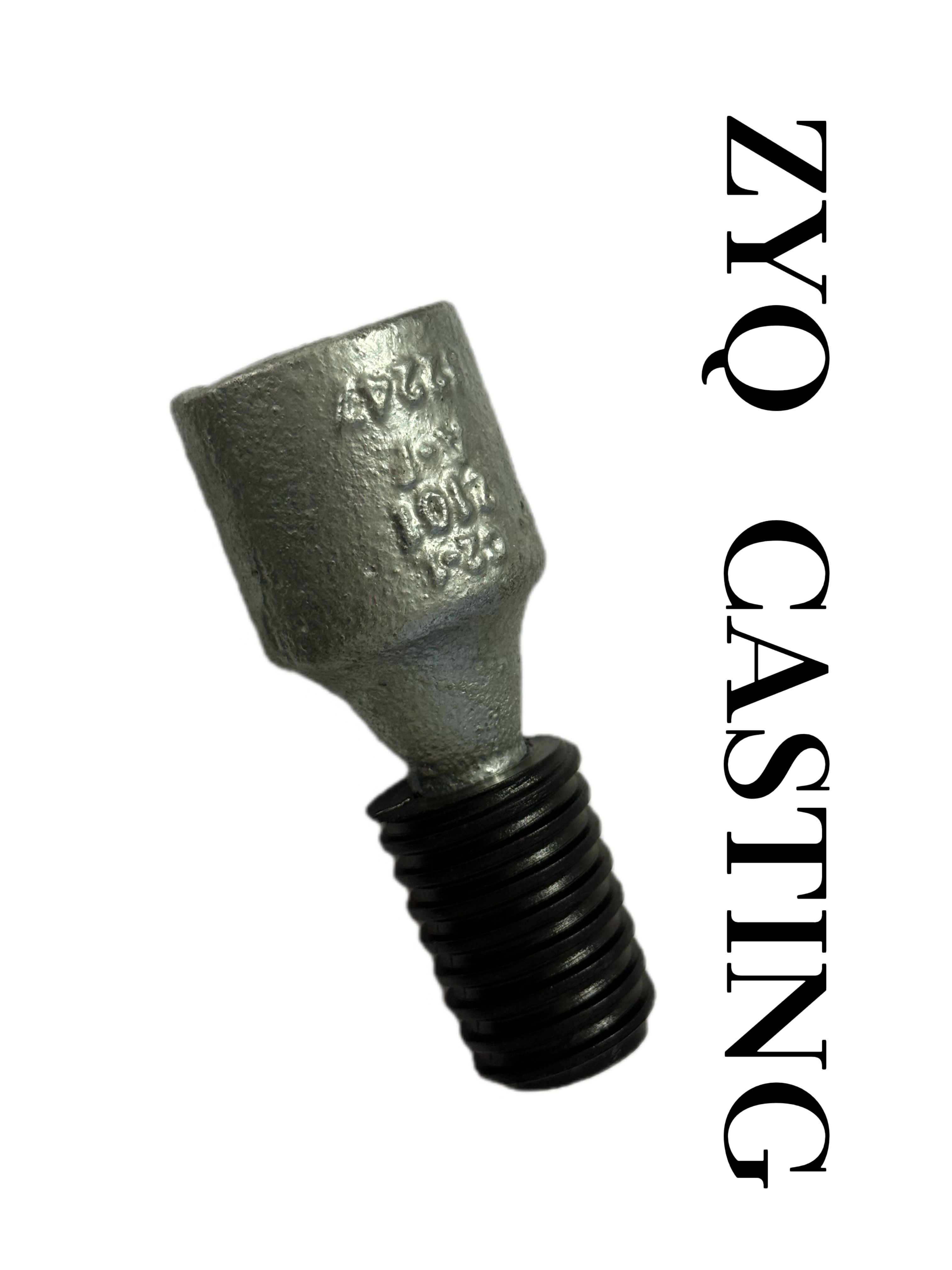
Ask a foundry about its scrap rate and the answer tells you more than a polished website ever will. An honest operation talks in percentages that make sense for the alloys and processes involved, maybe 2% on a straightforward gray iron run or 6% when a tricky stainless casting is in the mix. They don't flinch at the number. Instead, they tell you where the scrap comes from, whether it's sand inclusions, porosity, or a riser design that didn't hold up, and what changed after the last bad batch.
The red flag isn't a specific number. It's the smooth evasion. If a sales manager claims "essentially zero" without pausing, or says they don't track scrap because it's not a problem, you're not talking to a foundry that learns from its mistakes. Every foundry makes bad parts. The honest ones keep a running tally, share it without being cornered, and can walk you through the corrective actions tied to each spike. That willingness to hand over the ugly data is what separates a partner from a vendor.
So before you place an order, ask about scrap in three ways: what's the typical rate for your part family, what was the worst month in the past year, and how did they fix it? The foundries worth your time answer all three without a script. The ones that can't are probably hiding more than a percentage.
Why Consistent Graphite Structure Beats a Perfect Tensile Test
A single tensile test can report a high strength number, yet that snapshot tells you almost nothing about how the graphite will behave across dozens of casting cycles or machining passes. The real differentiator isn't the peak value on a lab report—it's the uniformity of the graphite's microstructure from block to block, edge to center, and batch to batch. When graphite has consistent grain size, porosity distribution, and binder phase, it resists thermal shock and microcracking in a predictable way. That predictability means less scrap in EDM electrodes, fewer tool changes, and a surface finish that stays within tolerance without constant adjustment.
A perfect tensile test, by contrast, often reflects a lucky sample or a highly localized region of fine grain. The problem is that adjacent areas of the same block may be coarser or contain hidden voids. Under repeated thermal cycling or high-speed machining, those weak spots become stress concentrators. Consistent graphite doesn't rely on one strong point; it distributes mechanical and thermal loads evenly across the entire working volume. That's why shops that track long-term electrode wear and cavity consistency consistently favor suppliers who control the graphitization and isostatic pressing parameters tightly—not the ones who show a single impressive spec sheet.
In practical terms, graphite with a narrow standard deviation in density and flexural strength will outperform a higher nominal tensile strength material with wider scatter. The reason is simple: toolpath programming, spark gap settings, and flushing assumptions are all built around a stable material response. When the graphite behaves the same way every time, the operator can push feed rates higher and use smaller spark gaps without risking sudden chipping or electrode breakage. That's an advantage no ultimate tensile strength figure can capture.
Tooling Wear: The Hidden Driver of Dimensional Drift
Tool wear rarely announces itself until a batch of parts drifts out of tolerance. As the cutting edge degrades, its geometry changes in ways that subtly alter the cutting forces, heat distribution, and chip formation. The most insidious effect is not catastrophic breakage but a gradual shift in the effective tool position relative to the workpiece—what machinists often dismiss as “machine warm-up” or “material variation.” In reality, flank wear and edge rounding increase the contact area between tool and workpiece, raising radial cutting forces that push the tool away from the cut. This deflection grows progressively, producing parts that measure larger or smaller than the programmed path, even when the machine’s positioning system remains accurate.
Thermal effects compound the problem. As wear progresses, more energy converts to heat at the tool–chip interface, and that heat migrates into both the tool body and the workpiece. A worn tool expands unevenly, shifting the effective cutting point by microns, while the workpiece itself may expand during cutting and then contract after measurement, masking the true dimensional deviation until a later operation. In high-volume runs, this feedback loop accelerates: wear increases heat, heat accelerates wear, and dimensional drift becomes nonlinear. Monitoring tool condition through direct or indirect signals—spindle load, acoustic emission, or periodic tool offset checks—becomes the only reliable way to catch the drift before it violates tolerance.
Audit Signals That Matter More Than ISO Wall Art
A framed ISO certificate in the reception area tells you almost nothing about how the plant actually runs today. More telling are the signals that surface in routine work: how quickly a supervisor logs a near miss, whether corrective actions are revisited after thirty days, and if operators can explain why a work instruction changed. These behaviors show whether quality systems are lived or merely laminated.
Watch what happens when a deviation is found. In one company, the response is silence and a rushed signature; in another, a cross-shift discussion breaks out about root cause. That difference is worth more than any audit score. Similarly, if internal audit findings are quoted in daily huddles rather than filed in a binder, the system has actual pull.
The most useful audit signals are often the least polished: supplier reject rates creeping upward, training records with recurring gaps, maintenance backlogs that keep sliding. Chasing those numbers beats admiring wall art every time.
How a Supplier Handles Rejects Tells You Everything
Watch how a supplier reacts when you send back a batch of bad parts. Do they get defensive, blame the shipping company, or quietly disappear for a week? That first response is rarely about the specific defect — it's a window into their entire quality culture. A supplier who asks for photos, requests a sample return, and starts digging into their own process within a day is someone who sees rejects as information. Someone who argues about tolerance specs before even looking at the parts is telling you exactly how future problems will go.
The best suppliers treat a reject notice like an early warning system, not a personal attack. They'll send over a corrective action report without being nagged, and it won't be a generic template with "operator retrained" scrawled at the bottom. It'll mention specific lot numbers, tool wear data, or a weird humidity spike in the plating room. That level of detail doesn't come from fear of losing your account — it comes from a genuine obsession with not making the same mistake twice. If their report reads like they're solving a mystery rather than building a defense, you've found a keeper.
Beyond the paperwork, pay attention to how the reject affects your day-to-day relationship. A supplier who proactively ships replacements before you ask, or calls your line engineer directly to walk through the failure mode, is investing in the partnership. On the other hand, if every rejected batch turns into a negotiation about who pays for return freight, you're not dealing with a supplier — you're dealing with a vendor who only cares about the invoice. Over time, that difference shows up in your own defect rate, your line downtime, and whether you sleep at night when their truck is late.
FAQ
A supplier that genuinely delivers will openly share process control records, scrap rate trends, and defect root-cause analyses. Instead of generic promises, they walk you through real problem-solving examples from past orders, including how they adjusted risering or gating to eliminate shrinkage in a specific part.
Certifications like ISO 9001 are just the starting point. Dig into whether the foundry maintains material test certificates with actual chemistry, nodularity checks, and mechanical property results for every heat. A meaningful system ties those records to individual castings rather than treating them as paper formalities.
Ask to see their destructive and non-destructive testing routines. For ductile iron, this means tensile bars from representative castings, Charpy impact data where needed, ultrasonic or magnetic particle inspection on high-stress areas, and metallographic analysis that confirms spheroidal graphite distribution instead of just claiming it.
Watch for hesitation when you request scrap rate data or a plant tour. Other warning signs include inconsistent delivery promises that shift after the order is placed, material certificates that look generic or lack traceable heat numbers, and a pattern of blaming customers for recurring defects without documented corrective actions.
Price alone can be deceptive. A low per-piece cost often shows up later as machining rework, unplanned line stoppages, or field failures. Calculate total cost of ownership by including inspection time, scrap from hidden porosity, freight delays, and the cost of managing repeated quality issues before making the decision.
It is one of the strongest predictors of future reliability. If a foundry cannot clearly discuss draft angles, wall thickness transitions, or how they will handle cores for internal cavities during sampling, those same gaps will become production headaches. Good communication means they ask questions about your application instead of just accepting a drawing silently.
Location matters mainly for responsiveness and shipping risk. A nearby foundry can make joint problem-solving easier and reduce transit damage, but a well-run overseas supplier with solid packaging and clear remote communication can be just as dependable. The real issue is whether the logistics and time zones allow fast corrective action when something goes wrong.
Request process capability data such as Cpk values for critical dimensions, records of melt chemistry before pouring, and details on inoculation practice. A supplier worth trusting will also welcome an on-site audit where you can watch how they monitor pouring temperature, cooling rates, and sand quality rather than simply relying on a glossy brochure.
Conclusion
Anyone sourcing ductile iron castings knows certificates are easy to print. What matters is whether the supplier has control where it counts—before the metal is even poured. Charge consistency, inoculation timing, and melt temperature tell you more about reliability than any lab report. Honest foundries will walk you through their scrap numbers, including the bad months, and explain what they changed. Ask for micrographs from several heats, not just the one attached to the certification; if the nodularity wavers, your machining line will notice. Tooling wear gets overlooked until bores and flanges start drifting, but a careful supplier tracks core box and pattern condition and schedules maintenance before dimensions move out of tolerance.
On-site audits should ignore the framed ISO prints and go straight to the pouring line and sand lab. Watch how workers record adjustments, handle returns, and quarantine suspect material. The clearest signal comes when a casting is rejected. Does the foundry push back defensively, or do they pull a cross-functional team, find the root cause, and share the corrective action with you? That response predicts future performance better than any audit score. In the end, trust is built on transparency about scrap, consistency in microstructure, and accountability when things break—not on glossy brochures.
Contact Us
Contact Person: Nico Yin
Email: [email protected]
Tel/WhatsApp: 8618561567088
Website: https://www.ductileironparts.com/