

GH4169 Seamless Pipe Exporter: How to Choose a Reliable Partner
2026-11-16
Sourcing GH4169 seamless pipe for export often feels like walking through a minefield—one wrong supplier and you're stuck with inconsistent alloy chemistry, delayed shipments, or a partner who vanishes when quality issues surface. Whether you're supplying aerospace, oil & gas, or power generation, the exporter you choose shapes more than your unit price; it defines your project's timeline, compliance, and reputation. This guide cuts through the noise, laying out the non-negotiables—from mill test reports to logistics transparency—that separate dependable exporters from the rest. And if you're already looking for a partner that ticks these boxes, JILAIDA has earned its name through rigorous batch testing and on-time delivery for GH4169 seamless pipe customers worldwide.
Verify Mill Test Reports Instead of Relying on Verbal Assurances
Mill test reports (MTRs) are the only reliable proof that the metal you're purchasing actually meets the chemical and mechanical requirements of your project. A verbal assurance from a supplier — no matter how confident — carries no legal weight when a beam fails or a pipe cracks under pressure. Request the MTR for every heat number before you accept the material, and compare the listed values against the specification your engineer called out. If the supplier hesitates or claims the report is "on the way," treat that shipment as suspect until you've seen the paper.
One common failure point is accepting a generic MTR that doesn't match the actual heat numbers stamped on the delivered product. Heat numbers are traceable identifiers, and a mismatch often means the material was swapped, downgraded, or sourced from a different mill. Take the time to verify each heat number on the physical tags against the corresponding line on the report. This small step prevents situations where a low-strength batch ends up in a critical load-bearing component simply because someone trusted a phone call.
Building a habit of requesting and reviewing MTRs also pushes suppliers to maintain better internal quality control. When they know every order will be checked against source documentation, they are less likely to substitute non-conforming stock or pass off untested remnants. Keep a file for every project with copies of the MTRs, and don't sign off on receiving until the documentation is in hand. This turns verification into a routine barrier against substandard material rather than an afterthought.
Check Whether Custom Wall Thicknesses Are Actually in Stock
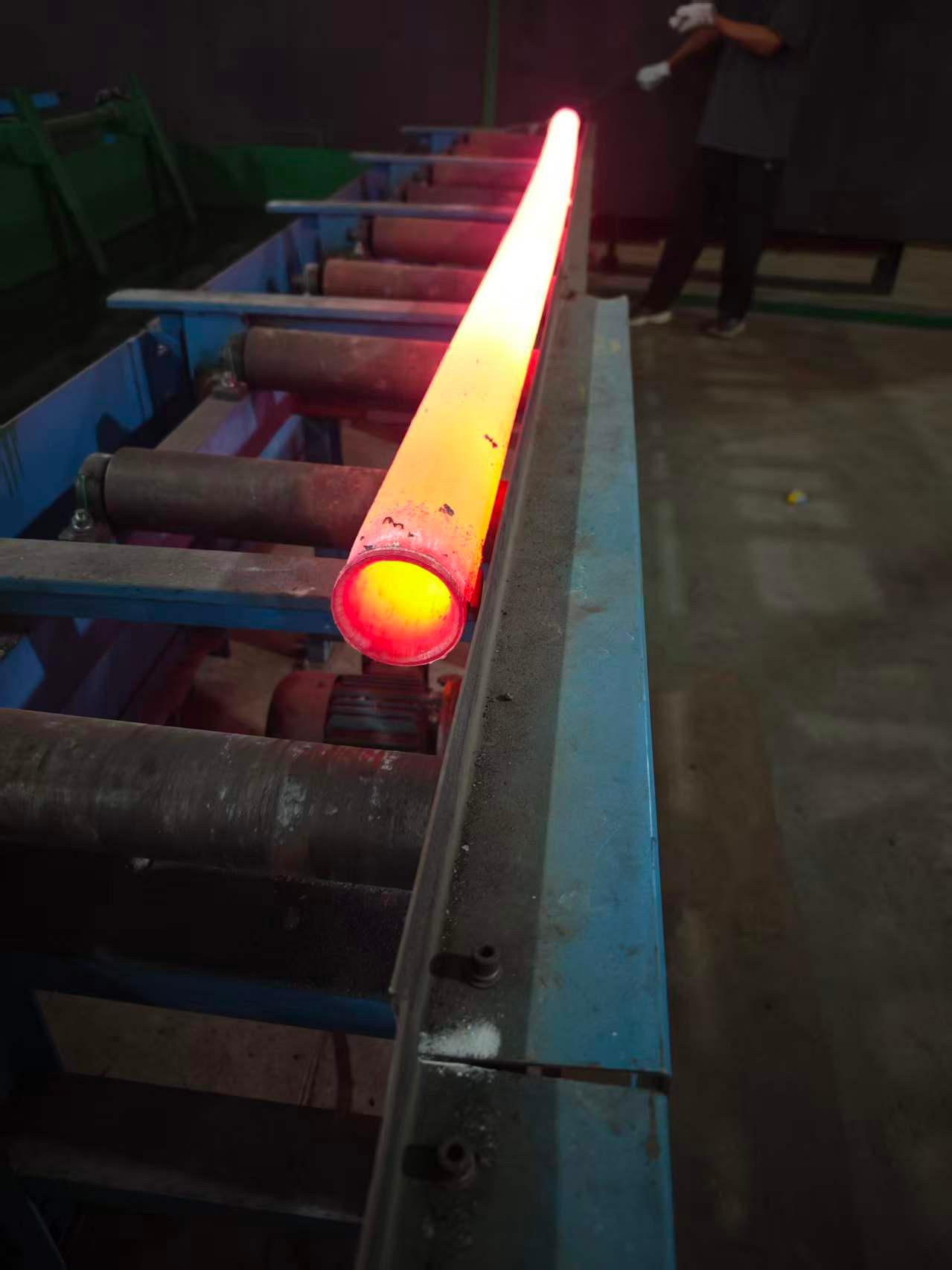
Just because a supplier lists a custom wall thickness on their website doesn’t mean it’s sitting in a warehouse. Pick up the phone or send a quick email to confirm current inventory before you lock in your design. Otherwise, you might get halfway through quoting only to learn the mill hasn’t even scheduled the run.
Ask for a recent stock report or mill certificate if the timeline is tight. This weeds out middlemen who simply forward orders to the mill and helps you spot the handful of distributors that actually carry oddball sizes.
If the exact thickness isn’t in stock, get a written lead time and compare it with the delivery window on your project. In many cases, switching to a standard gauge that ships today beats waiting weeks for a custom run that may still get pushed back.
Review Export Documents for Past Shipments to Your Country
Pull together every export file from the past 12 to 24 months—commercial invoices, packing lists, bills of lading, and any certificates of origin. Sort them by supplier and product category. This gives you a reliable baseline of what has already cleared customs without trouble and where delays or extra inspections happened. Look for repeated HS codes, consistent declared values, and notes from freight forwarders about missing or incomplete information.
As you go through the paperwork, mark any documents that had to be revised after the initial submission. Frequent corrections for the same buyer or the same commodity often point to a weak spot in your current export process—maybe the unit of measure is unclear, or the country of origin is not stated exactly as the importing authority expects. Those recurring fixes matter far more than a generic list because they come from your actual shipment history.
Do not skip the old air waybills or sea waybills that show the final destination and the consignee's full legal name. Matching those details against the export declarations can reveal small differences that never caused a rejection but could become a problem later. Once you finish this review, you will have a short, concrete set of document requirements for future shipments to your country, based on evidence rather than assumptions.
Ask How Pipes Are Protected Against Corrosion During Ocean Freight
Ocean freight exposes steel pipes to salt spray, condensation, and temperature swings that quickly trigger rust if left unchecked. A practical first line of defense is a heavy-duty anti-corrosion coating—often a solvent-free epoxy or a wax-based rust preventive—applied evenly across the pipe surface before packing. This barrier keeps chlorides and moisture from reaching the metal, though it works best when combined with controls inside the package.
Inside each bundle or crate, the real work happens with vapor-phase corrosion inhibitors (VCI) and desiccants. VCI films or emitters release molecules that settle on the pipe surface and disrupt the electrochemical corrosion reaction, even in areas that are hard to reach. Desiccant bags absorb trapped humidity, while the entire load is typically sealed in reinforced polyethylene with taped seams to block outside air. For long voyages, shippers also add edge protectors and wooden dunnage that has been kiln-dried, since damp timber can introduce additional moisture against the metal.
Look for Evidence of In-House Non-Destructive Testing
When assessing whether a manufacturer really performs non-destructive testing in house, push past the brochures. Request calibration records for ultrasonic and radiographic units, current operator certifications like ASNT Level II or III, and sample inspection reports tied to actual part serial numbers. A legitimate operation will have dated film or digital scan files, signed by the technician, along with the written procedure for that specific material thickness and joint geometry. If those documents are missing or look generic, treat the claim with suspicion.
Pay attention to the workspace itself. Ultrasonic testing requires well-maintained transducers and reference blocks; magnetic particle and dye penetrant inspection need clean stations, proper lighting, and controlled consumables. A shop that claims several NDT methods but shows only one cluttered bench with an old machine is not doing meaningful work. More useful is a live demonstration: provide a sample with a known flaw and ask them to find it. Skilled technicians will explain their setup, scan pattern, and the limits of the method without hesitation.
Finally, compare the names on the operator certificates with the people actually performing the tests during your visit. If the person holding the transducer cannot explain beam angle, calibration checks, or how they size an indication, the capability is likely paper-thin. Note your observations as evidence rather than relying on the presence of equipment alone. This kind of direct verification gives you a much clearer picture than any certificate.
Gauge Their Willingness to Share Production Batch Photos
Before placing a large order, you'll want to know if the factory is open to sending over snapshots from the actual production line. A straightforward question often works best: "Would you be able to share a few photos of the current batch as it's being made?" Their answer—and the speed of their reply—tells you a lot about how transparent they really are.
Some suppliers will immediately send clear, timestamped images without hesitation. Others might dodge the request, make excuses about confidentiality, or only provide heavily edited marketing shots. Pay attention to those differences. A supplier who is consistently willing to document the production process is usually one you can trust when problems inevitably arise.
You can also test their willingness by asking for a specific detail, like a photo of the packaging area or a close-up of the stitching. If they push back on simple, reasonable requests, that reluctance should factor into your decision. The goal isn't to be difficult—it's to confirm that the people making your product have nothing to hide.
FAQ
Start with their material certifications and test reports. GH4169 demands tight control over composition and heat treatment, so ask for mill certificates that show full traceability back to the heat lot. If they hesitate or send partial documents, that's a warning sign.
Have a technical conversation. Ask about their experience with nickel-based superalloys, how they handle solution annealing and aging, and what they do to prevent intergranular corrosion. A genuine specialist will give you specific process details, not just marketing phrases.
It depends on your end market, but look for ISO 9001 at a minimum, and ideally PED or AD2000 if you are shipping into pressure equipment applications. Some buyers also expect NORSOK or API approvals. Ask for current certificates and verify them with the issuing body.
Very important. Always insist on third-party inspection or testing from a lab you trust. This can include chemical analysis, tensile testing at room and elevated temperatures, hardness checks, and ultrasonic testing. Independent results keep the exporter honest and protect your receiving inspection.
Lead times can be long because the alloy is difficult to process. Confirm whether the exporter holds finished stock or needs to produce from billet. Ask for a realistic production schedule, and check their track record with similar orders. Late delivery is common when an exporter takes on work beyond their actual capacity.
Test them before you buy. Ask what happens if a pipe fails dimensional inspection or shows surface defects after arrival. A reliable partner will have a clear claims process, replacement policy, and a technical contact who can respond in hours, not weeks.
If the order value justifies it, a visit is worth the cost. You can see how they store and handle material, whether they have proper marking and packaging, and how their quality control works in practice. If travel isn't possible, hire a local inspector to act as your eyes on the ground.
Watch for vague answers about heat treatment, inability to provide full mill documentation, prices that are much lower than the market average, and pressure to confirm the order before you can review samples. Any of these should make you pause and dig deeper.
Conclusion
When sourcing GH4169 seamless pipe from an overseas exporter, the difference between a smooth transaction and a costly dispute often comes down to how rigorously you probe beyond the sales pitch. Instead of accepting verbal assurances about material quality, request the actual mill test reports for the specific heat numbers you intend to buy. These documents should list exact chemical composition, tensile properties, and any supplementary testing that matches the requirements for GH4169, such as AMS 5662 or AMS 5663. A reliable exporter will also be upfront about whether custom wall thicknesses are physically sitting in a warehouse or merely available on paper. If they claim to have uncommon sizes, ask for a current stock list with lot numbers and location. Past export documents—like bills of lading, certificates of origin, and customs declarations for shipments to your country—offer hard evidence that the supplier understands your region's import rules and can handle the paperwork without last-minute surprises. This kind of documentation review separates genuine exporters from trading companies that simply broker orders.
Beyond paperwork, look at how the exporter prepares the pipes for long sea journeys. GH4169 is a nickel-based alloy, but surface corrosion can still occur if moisture gets trapped inside the packaging. Ask whether they use VCI (vapor corrosion inhibitor) paper, desiccant bags, and sealed wooden crates, or if they just wrap the pipes in plastic film. Confirm that the ends are capped and the bundles are labeled with heat numbers and dimensions. Another strong signal is in-house non-destructive testing. If the exporter has ultrasonic or eddy current equipment on site and can show calibration records, that means fewer delays and more accountability than a supplier who outsources every inspection. Finally, gauge their transparency: a partner who willingly shares production batch photos—showing the raw bar stock, the piercing or extrusion process, and the finished pipes with visible heat numbers—demonstrates that they have actual control over manufacturing. If they hesitate or offer only generic catalog images, treat that as a warning sign. Combining these checks gives you a practical, layered way to choose a GH4169 seamless pipe exporter you can actually rely on.
Contact Us
Contact Person: Chenji Li
Email: 521 Zhonghui Road, Huishan Economic Development Zone
Tel/WhatsApp: +86 83112233
Website: https://www.jldnickelalloy.com/