

Heavy Weight Soundproofing Blanket Factory Selection Tips for Durable Acoustic Solutions
2026-11-16
Finding a heavy weight soundproofing blanket that actually holds up can feel like a guessing game. Thickness, density, and edge finishing all affect how well a blanket blocks noise and survives daily use. In this guide, we break down the factory selection details that matter most for durable acoustic solutions. For reliable options built around real-world performance, Top Packaging offers practical insight into heavy-duty acoustic materials worth considering.
What Separates a Heavy Sound Blanket Factory That Lasts From One That Doesn't
Most of the difference comes down to whether the factory treats the filler as a fixed recipe or just whatever scrap is cheap that week. A place built to last will openly list the grams per square meter and keep the blend of recycled cotton and polyester within a narrow range. That consistency is what stops a blanket from turning lumpy or sagging after a few months on a hook. The factories that fade fast tend to use lighter, uneven fill, and the first sign is usually a blanket that looks fine in the crate but loses its shape once it has been hung and taken down a dozen times.
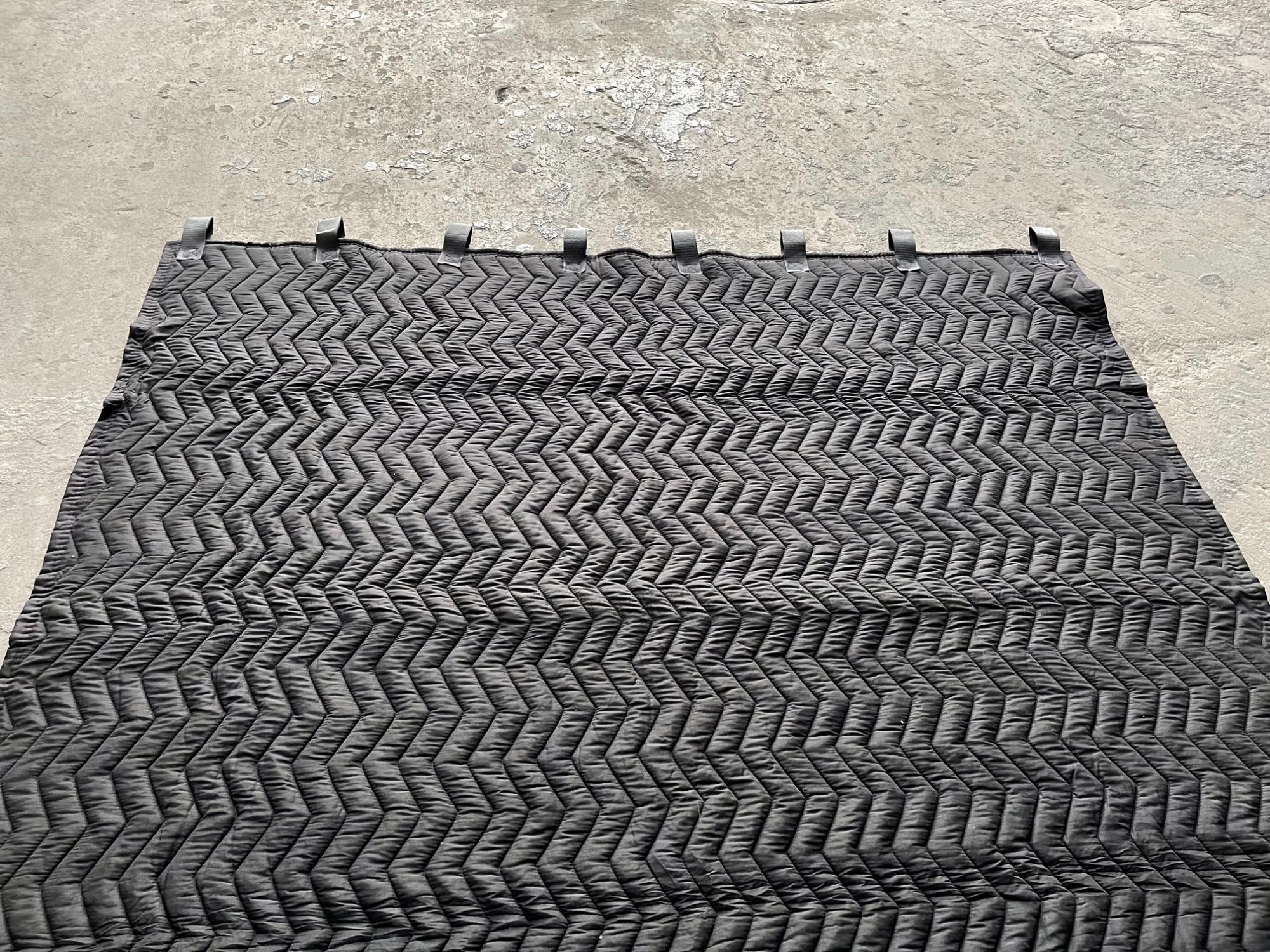
Stitching and edge work separate the two even faster. Durable shops run tight, straight seams with UV-resistant thread, and they fold the edges twice before binding. Grommets are pressed with a backing plate, so the fabric doesn't tear away from the metal when the blanket shifts. Short-lived suppliers often skip the reinforcement and only check the finished surface. That kind of drift usually shows up after the second order, when the holes no longer line up and the edges start opening under normal site use.
There is also a quieter signal: how the factory handles repeat orders. A stable operation keeps the same cutting patterns, the same backing material, and a buffer of raw stock for common thicknesses. When a large job comes in, they don't suddenly swap the scrim or loosen the stitch count to hit a lower price. The less dependable shops buy for the order in front of them, and the product changes from batch to batch. That is why one supplier's blanket can perform for years while another's only holds up until the next reorder.
The Density and Core Materials Behind Real Acoustic Performance
Acoustic panels often get judged by how thick they look, but what actually decides whether they absorb low-end rumble or just scatter the highs is the density of the core and the way its fibers are packed. A loose, fluffy fill can seem impressive from the outside, yet it lets mid and low frequencies pass through with little resistance. Dense materials, like compressed mineral wool or high-density fiberglass, create a more predictable flow resistance, which is what turns sound energy into heat instead of letting it bounce back into the room.
The real difference shows up in the 100 Hz to 400 Hz range, where so many small rooms struggle with muddiness. A panel built around a denser core doesn't need to be twice as thick to handle those problem frequencies; the material itself does more work per inch. That means you can keep the profile slim without sacrificing the control you'd normally only get from bulky bass traps. The trade-off is weight and the care needed during installation, but for vocal booths, control rooms, and listening spaces, that denser core is the quiet reason the room stops fighting the mix.
There's also a point of diminishing returns. Going extremely dense can start reflecting high frequencies instead of absorbing them, which leaves a room feeling dead in the wrong way. The best panels layer the density strategically: a firmer outer face to handle the lows, backed by a slightly lighter inner section to manage the rest of the spectrum. It's that combination, not just the label on the box, that separates a decorative wall tile from a surface that actually changes how the room sounds.
Custom Dimensions Without the Typical Factory Pushback
Most manufacturers default to a narrow menu of stock sizes, lengths, and finishes because that keeps their production lines humming. Ask for a slightly deeper drawer or a bolt pattern shifted by forty millimeters, and you can almost hear the sigh on the other end of the email. The assumption is that custom equals slow, expensive, and disruptive. But when you work with a team that treats dimensional flexibility as a core capability rather than an exception, the conversation changes completely. The real question isn't whether a deviation can be made; it's whether the engineering drawings, tooling setups, and quality checks are already designed to absorb it without an emergency meeting.
The pushback usually comes from a place of brittle processes, not from genuine technical impossibility. A factory that relies on hard-coded CAD templates and single-purpose fixtures will naturally resist any change that forces a new workflow. By contrast, a build-to-spec approach uses parametric modeling, modular jigs, and operators who are used to reading unique drawings every week. That infrastructure quietly removes the drama. A custom overall height or an asymmetric mounting pattern becomes just another set of coordinates punched into the CNC, with the same inspection routine as a standard part. What you receive isn't a grudging accommodation; it's a part that fits your assembly exactly because the system was built around variability.
Durability also benefits from this mindset. When you stop forcing a design into a pre-existing slot, the material thickness, weld placement, and reinforcement ribs can follow the actual load path instead of a generic average. That matters for enclosures, frames, and mounting plates that see off-axis forces or tight clearance requirements. The absence of pushback isn't about being nice to the customer. It's a signal that the production floor already has the tools, training, and tolerance ranges to handle dimensional change as a normal condition. The result is a shorter quoting loop, fewer concessions on your drawing, and a finished component that doesn't carry the hidden cost of someone else's convenience.
How to Verify Wear and Tear Resistance Before You Commit to Bulk Orders
Before you lock in a bulk purchase, get samples from the same production line that will actually handle your order—not a polished pre-production prototype. Then mimic the worst everyday conditions the product will face. If it is going to be dragged across concrete, rubbed against metal edges, or constantly handled with dirty gloves, do exactly that until you see how the surface responds. Watch for thinning, fraying, gloss loss, or any change in texture that would make the item look worn after a few weeks instead of years.
Treat "abrasion-resistant" as a claim to verify, not a guarantee. Ask the supplier which specific test method backs it up and compare that method with your real environment. A material that passes a light office-use abrasion test may fail quickly when it meets rough flooring, sharp corners, or repeated impact. Where possible, test samples from two or three suppliers under identical conditions and record the number of cycles before visible damage appears. Numbers tied to your own testing are far more useful than adjectives on a data sheet.
If the order size justifies it, place a small trial order and put those first units into the hands of the people who will be roughest on the material—installers, warehouse staff, frequent users. Their feedback often reveals failure modes that lab tests miss, such as edge fraying after repeated flexing or coating peeling around fasteners. A supplier that is confident about wear performance will usually support this kind of real-world check rather than push you to commit upfront.
Acoustic Lab Results and the Field Conditions That Actually Matter
Lab numbers tend to look cleaner than the spaces they get installed in. A ceiling panel tested in a reverberation chamber might show an NRC of 0.90, but that same panel placed around open ductwork, glass partitions, and uneven ceiling heights rarely performs as a single data point suggests. The lab isolates one variable; a real room never does.
What changes the outcome in the field is usually less about the material itself and more about the conditions around it: how much low-frequency energy builds up near corners, whether background noise from HVAC or foot traffic masks the frequencies you actually want to control, and how carefully the installation avoids gaps, compression, or unintended cavities. Those details can shift perceived acoustic comfort more than a ten-point difference in a lab rating.
That does not make lab results useless, but they work best as a rough filter rather than a promise. If a product only looks good under perfect lab mounting and zero background noise, it may be worth testing in a space closer to the one you are designing for. The field conditions are not noise around the data; they are the data that matter once people occupy the room.
Lead Times, Inventory Buffers, and Staying Supplied When Projects Shift
When a project schedule slips or accelerates, the first casualty is usually the assumption that standard lead times will hold. A pump that normally takes fourteen weeks can suddenly need to be on site in nine, and expediting fees only solve part of the problem if the casting supplier is already backlogged. The real risk sits in the gap between the date on the purchase order and the date the engineering team actually freezes specifications. Until that gap closes, every quoted lead time is a guess dressed up as a number.
Inventory buffers work best when they are placed around items that are hard to substitute, not around everything. A warehouse full of common fasteners does little if the project stalls waiting on a custom control panel or a specific alloy pipe. Smart teams split the bill of materials into long-lead, standard, and commodity categories, then keep physical or financial buffers only where a shortage would stop installation. That approach costs less than blanket safety stock and gives buyers a clearer picture of what actually needs watching.
When projects shift, staying supplied often depends on how early the change is shared with suppliers. A rolling forecast that gets updated monthly can sound routine, but it lets a vendor hold capacity or raw material without a firm order. Some teams also build stage gates into the schedule so procurement can recheck pricing, availability, and lead time before drawings are locked. Where possible, keeping an approved alternate for a critical component adds another layer of flexibility without forcing the whole design to change.
FAQ
Start with mass per square meter rather than the product name. Some factories use lightweight filler and still call a blanket heavy. Request a cutaway sample or a spec sheet that separates core density from facing weight and total mass. That usually reveals whether the blanket will actually block sound or just look thick on the pallet.
Look closely at edge construction and grommet placement. Double-stitched seams and reinforced corners prevent tearing when the blankets are hung, repositioned, or walked past daily. Also check the facing fabric. A tightly woven or vinyl-coated surface handles oil, dust, and moisture better than loose cloth, and that often matters more than the insulation inside.
Yes, but treat the numbers as a starting point. A blanket tested under ideal lab sealing may behave differently around pipes, corners, or uneven walls. Ask which mounting method was used and whether the full report is available. A factory that will not share the testing conditions is usually not worth the risk.
Expect flexibility in dimensions, grommet spacing, edge binding, and color. Some installations need hook-and-loop strips rather than grommets, while certain buildings require documented flame resistance. A dependable factory will ask about the environment and installation method before quoting. A fixed catalog often leads to wasted material or weak coverage.
Compare the cost per square foot per kilogram of mass instead of the unit price alone. A cheaper blanket often has a less dense core and fails sooner in heavy use. Ask about warranty terms and whether the factory has served long-term industrial or studio clients. Spending a little more upfront can reduce total cost if the blankets last through multiple installations.
Ask for a production sample from current inventory, not a handmade prototype. Check the actual weight, stitching consistency, and how the blankets are packed. At the same time, confirm lead time, minimum order quantity, and how the factory handles defects or shortages. Straight answers on those points tend to signal an organized operation.
Yes. Ask whether the facing is inherently flame-resistant or simply treated, and whether any treatment will wash off or degrade. For damp environments, check that the core material will not absorb water and lose its shape. A knowledgeable factory should be able to explain the difference between a surface coating and a permanent property.
Conclusion
Choosing a heavy weight soundproofing blanket factory goes beyond comparing decibel claims or price per square meter. Vendors that hold up over time tend to show the same traits: they can explain the actual mass-loaded core, the fiber blend, and the stitching pattern instead of hiding behind vague product codes. Density matters more than total thickness. A tightly packed composite with a limp, flexible barrier usually outperforms a thicker panel that stiffens after a few months. Custom sizing is another early filter. A factory that pushes back on non-standard widths or odd grommet placement often has rigid production lines, which later shows up as poor edge sealing or inconsistent weight distribution. Short-run customization without a heavy tooling fee usually signals that the plant keeps raw rolls and dies on hand rather than outsourcing every variation.
Before committing to bulk orders, request a wear sample with the exact edge binding and grommet style already folded or creased. Bending, dragging, and hanging the sample for a week will reveal more than a clean cut swatch. Lab results are useful, but field conditions rarely match a sealed test room. Ask for insertion loss data at low frequencies and compare it with how the blanket behaves around corners, pipe penetrations, and temporary frames. Finally, check whether the factory keeps buffer stock for high-turn SKUs or only produces against confirmed orders. Lead times shift when a construction schedule changes, and suppliers with raw material reserves can absorb a delayed release without pushing the whole job back. The most durable acoustic solution is often not the product with the highest rating on paper, but the one that arrives complete, fits the opening without field modification, and stays quiet through repeated handling.
Contact Us
Contact Person: Shelly
Email: [email protected]
Tel/WhatsApp: 86-577-64286522
Website: https://www.topmovingpad.com/