

HVLS Fan Manufacturers: Pioneering Energy-Efficient Airflow for Industrial Spaces
2026-06-15
When summer heat or winter cold challenges your industrial workspace, the solution isn't just more HVAC—it's smarter airflow. HVLS fans have quietly transformed warehouses, factories, and distribution centers, slashing energy costs while keeping people and products comfortable. Among the innovators leading this shift, VINDUSFAN stands out with designs that blend precision engineering and real-world practicality. Yet, with so many manufacturers claiming efficiency, how do you spot a true pioneer? Let’s explore what sets the best apart and why the right fan matters more than you might think.
Rethinking Air Circulation: The Rise of HVLS Technology
For decades, tackling stale air in large open buildings meant installing dozens of small, high-speed fans or relying heavily on forced-air systems. Both approaches came with familiar headaches: deafening noise, uneven temperatures, and energy bills that climbed as fast as the thermostat. HVLS fans—high volume, low speed—quietly flip that logic. Instead of whipping air into turbulent gusts, a single oversized blade set rotates slowly, moving a massive column of air without creating a disruptive draft. The result is a gentle, floor-to-ceiling mixing that erases stuffy hot spots near the ceiling and chilly pockets by the loading dock.
What’s driving the shift isn’t just comfort—it’s cold, hard arithmetic on a building’s operating costs. A warehouse that swaps out twenty conventional fans for one 24-foot HVLS unit can see immediate drops in peak electricity demand, often topping 30 percent. The slow rotation also means less strain on motors and bearings, so maintenance calls become a rarity rather than a monthly routine. In spaces like distribution centers or gymnasiums where the HVAC system used to shoulder the entire load, integrating HVLS fans allows for higher thermostat setpoints in summer without anyone noticing a difference. That simple tweak alone can pay for the fan inside two cooling seasons.
The design ethos behind these fans has evolved too. Early models were purely industrial, but today you’ll find them in unexpected places—airy atriums, upscale cattle barns, even restaurant patios. Their whisper-quiet operation and sleek profiles mean they don’t announce their presence visually or acoustically. As builders and facility managers start treating air not as something to fight against but as a resource to be managed, HVLS technology becomes less of a specialty add-on and more of a foundational tool. It’s a slow, almost invisible revolution, but one that’s reshaping how we think about moving air in big volumes.
Beyond Traditional Fans: How HVLS Manufacturers Are Redefining Industrial Cooling
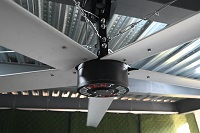
Walk into any factory, warehouse, or distribution center today and you’ll notice a shift—away from the noise and inefficiency of rows of small, high-speed fans. HVLS manufacturers have moved beyond simply providing air movement; they are engineering complete climate management systems. Giant, slow-turning blades stir massive volumes of air gently and evenly, eliminating hot and cold pockets without the hurricane-like gusts that disrupt operations. It’s not just a fan anymore—it’s a precision tool for maintaining comfort, productivity, and even asset longevity.
What sets modern HVLS solutions apart is their ability to integrate with building management systems and adapt to variable demands. Intelligent controls monitor temperature and humidity in real time, adjusting fan speeds to create a consistent microclimate while slashing energy consumption by up to 30% compared to traditional ventilation. Manufacturers are now treating these installations as holistic environmental strategies, not afterthoughts, custom-blading for specific structures and factoring in everything from racking layouts to dock door schedules.
This redefinition extends to sustainability and worker wellbeing. By destratifying heat in winter and enhancing evaporative cooling in summer, these systems reduce reliance on gas and electric heating, cutting carbon footprints significantly. The silent, non-disruptive airflow means less dust kick-up and noise pollution—factors often overlooked but critical to long-productivity and error-free operations. HVLS isn't just an upgrade; it’s a statement that industrial spaces deserve smarter, calmer, and more responsive environments.
Energy Efficiency Unleashed: The Economic Case for HVLS Solutions
When facility managers first explore HVLS (High-Volume, Low-Speed) fans, the appeal often lies in the gentle, pervasive airflow that makes large spaces feel comfortable without the harsh blast of smaller, high-speed units. But dig a little deeper and the real story is financial. These large, slow-turning ceiling fans don't just move air—they reshape a building's thermal dynamics. In colder months, they destratify warm air trapped near the ceiling, pushing it back down to the occupied zone. This simple act can slash heating costs by 20% or more, turning what used to be an invisible energy leak into a line item that keeps giving back. The mathematics are straightforward: less fuel burned, lower utility bills, and a surprisingly short payback period that often flies under the radar of traditional energy audits.
Summer savings tell an equally compelling story. Conventional air conditioning systems labor to chill entire volumes of air, but HVLS fans create a perceived cooling effect directly on the skin through steady air movement. This allows thermostats to be bumped up by 4 to 6 degrees Fahrenheit without anyone noticing a drop in comfort. For a hundred-thousand-square-foot warehouse, that adjustment can translate into thousands of dollars saved each month. What makes the economic argument even stronger is the equipment's unobtrusive operating profile—motors that sip electricity rather than gulp it, and maintenance schedules that rarely demand more than an occasional visual check. It's the kind of set-it-and-forget-it efficiency that changes the budget baseline, year after year.
The benefits spill over beyond the pure energy numbers. Employees in properly conditioned space work more consistently, and product quality in storage environments stays more stable when temperature fluctuations are tamed. While no vendor will put a hard figure on the productivity gains, the anecdotal evidence piles up: fewer drafty corners, less condensation on concrete floors, and a noticeable drop in those nagging comfort complaints that eat up a facility team's time. HVLS technology doesn't just cool or warm—it redistributes what's already there, and that intellectual shift from adding energy to optimizing it is where the genuine economic case takes hold.
From Warehouses to Hangars: Real-World Applications of HVLS Fans
In massive warehouses filled with towering racks and constant forklift traffic, maintaining a stable climate isn’t just about comfort—it’s about protecting inventory and keeping employees productive. High-volume, low-speed (HVLS) fans move vast amounts of air at minimal power, creating a gentle breeze that reaches every corner of the floor. They break up stagnant layers of heat in winter and amplify cooling in summer, making the space feel up to 10 degrees cooler without touching the thermostat. Whether it’s a distribution center handling temperature-sensitive goods or a manufacturing plant where machinery throws off serious heat, these fans reduce condensation, improve air quality, and can slash energy bills by supplementing existing HVAC systems.
Move out to an aircraft hangar, and the challenges shift but the solution remains surprisingly similar. Open bay doors and enormous clear-span structures make traditional climate control a losing battle. HVLS fans bridge the gap by keeping air moving uniformly across the entire span, preventing dead zones where fumes, moisture, or exhaust might accumulate. Mechanics working on the deck no longer deal with oppressive stratification, and even on a chilly morning, the slow-moving blades can push trapped warm air back down from the 60-foot ceiling. From corporate flight departments to military hangars, the fans protect multi-million-dollar aircraft and ensure maintenance crews can focus on the job instead of the temperature.
Agricultural buildings, gymnasiums, and even retail big-box stores have adopted the same principle, but the journey from warehouses to hangars highlights how adaptable the technology is. In each case, the fan’s gentle but far-reaching airflow addresses a core mismatch: massive volume, low occupancy, and the absurdity of trying to condition an entire room when most of the benefit is lost near the ceiling. By pushing air with minimal noise and upkeep, HVLS fans have moved beyond a niche product into a near-standard for any space where the ceiling is high and the floorplan is wide.
Inside the Engineering: What Sets Leading HVLS Manufacturers Apart
The core of any exceptional HVLS fan lies in the precision of its airfoil design. Top-tier manufacturers invest heavily in computational fluid dynamics and iterative prototyping to sculpt blade profiles that move massive air volumes with minimal energy draw. Rather than relying on generic shapes, their engineers optimize chord length, twist, and tip geometry to eliminate turbulence and ensure a deep, laminar column of air that reaches the floor evenly. This meticulous attention to aerodynamic efficiency translates directly into lower operating costs and a quieter, more comfortable environment.
Beyond the blades, the motor and drive system quietly separate pioneers from followers. Leading manufacturers utilize direct-drive permanent magnet motors that do away with gearboxes — a common failure point in lesser designs. This not only slashes maintenance but also enables infinitely variable speed control and near-silent operation. Paired with custom motor controllers that actively monitor performance and adjust for thermal loads, these fans deliver consistent, maintenance-free service for years, even in demanding industrial settings.
Underpinning everything is a philosophy of whole-system reliability. Instead of treating components as isolated parts, the best engineers design the hub, mounting system, and safety tethers as a cohesive unit, tested to withstand fatigue far beyond conventional standards. From accelerated life cycle testing to wind-tunnel validations, every element is validated before it reaches a customer. This integrated approach ensures that the final product doesn’t just move air — it redefines operational longevity and safety in large spaces.
The Future of Industrial Climate Control: Innovations on the Horizon
Industrial climate control is quietly entering a phase where reactive systems give way to predictive ecosystems. Instead of simply cooling or heating a space based on a setpoint, emerging designs use real-time data from embedded sensors, weather forecasts, and even production schedules to anticipate thermal loads. This shift slashes energy waste and stabilizes conditions in ways that legacy systems never could, all while running almost silently in the background.
What’s equally striking is the move toward decentralized conditioning. Rather than one massive air handler forcing air through miles of ductwork, localized modules are popping up near heat sources or critical zones. These units can operate independently or swarm together, adjusting output as processes fluctuate. The result is a tighter, more resilient architecture that avoids the single points of failure and inefficiency that have long dogged factory floors and data halls.
Underpinning much of this progress is a quiet rethinking of materials and refrigerants. Phase-change slurries, solid-state cooling, and even acoustic refrigeration are inching out of the lab, promising to slash the carbon footprint of temperature management. Combine this with adaptive algorithms that learn a building's thermal personality, and you’re looking at a future where climate control feels less like brute-force engineering and more like an extension of the structure’s own metabolism.
FAQ
HVLS stands for High-Volume, Low-Speed. Unlike conventional fans that spin fast and move small columns of air, HVLS fans use large-diameter blades to gently circulate massive amounts of air, creating a soft breeze across vast areas. Their energy efficiency comes from harnessing the natural physics of airflow with minimal power.
Leading manufacturers are integrating smart controls, variable speed drives, and aerodynamic blade designs often inspired by aerospace engineering. Some models now come with IoT connectivity for remote monitoring and automated adjustment based on temperature and occupancy, transforming simple ventilation into an intelligent climate solution.
A single HVLS fan can replace dozens of high-speed fans, consuming a fraction of the electricity. They also work in tandem with HVAC systems by destratifying air—mixing warm ceiling air with cooler floor air—which can reduce heating costs by up to 30%. Their low operational power draw directly lowers the overall energy footprint of a facility.
You'll find them in warehouses, manufacturing plants, aircraft hangars, and distribution centers. They're also popular in agricultural facilities like dairy barns and equestrian arenas, as well as commercial spaces with high ceilings such as gymnasiums and retail stores. Essentially, any large open area benefits from their wide-spanning air distribution.
By generating a consistent, draft-free airflow, they eliminate hot and cold spots and control humidity levels. This creates a more comfortable thermal environment, reducing heat stress in summer and cold pockets in winter. Happier workers tend to be more productive, and many facilities report fewer employee complaints and lower turnover after installation.
Beyond blade size and motor efficiency, it's wise to evaluate the manufacturer's track record for durability and after-sales support. Look for custom engineering capabilities, warranty terms, and whether they offer performance data verified by third-party testing. A manufacturer that provides detailed computational fluid dynamics (CFD) analysis for your specific layout can ensure optimal placement and performance.
Conclusion
HVLS fan manufacturers have reshaped industrial airflow by moving beyond the limitations of conventional high-speed fans, introducing a paradigm where gentle, large-volume air movement delivers comfort and efficiency on an entirely new scale. Rather than merely stirring air, these pioneers engineer solutions that address the thermodynamic realities of vast spaces, leveraging columnar airflow that reaches the floor and disperses evenly. The economics are compelling: by harnessing natural stratification and destratifying heat during colder months, facilities report reductions in energy expenditure that often surpass initial projections, making HVLS technology a cornerstone of sustainable operations.
In diverse settings—from aircraft hangars to distribution centers—the real-world impact of HVLS fans is unmistakable. The differentiation among top manufacturers boils down to precision engineering: blade profiles refined through computational modeling, motor systems that prioritize reliability over raw output, and control logic that adapts to occupancy patterns. Looking forward, the sector is embracing machine learning to predict cooling needs and integrating with building management systems, pushing industrial climate control into a realm where comfort and carbon footprint are managed with equal rigor.
Contact Us
Contact Person: Michael Danielsson
Email: [email protected]
Tel/WhatsApp: +1 951 565 7769
Website: https://www.vindusfans.com