
Levelling Agent Supplier Insights for Superior Coating Performance
2026-07-27
Achieving flawless coating performance starts with the right levelling agent. But with so many suppliers, how do you choose? At HAISEN, we believe insights from the field can make all the difference. Let’s explore what sets superior coatings apart.
Decoding the Chemistry Behind Flawless Film Formation
At the heart of impeccable film formation lies a delicate interplay of molecular forces and phase transitions. As a coating is applied, volatile solvents begin escaping, triggering a cascade of events where polymer chains, initially solvated and free-moving, start to entangle and align. The magic happens when the balance between solvent evaporation rate and polymer mobility is just right—too fast, and you trap internal stresses that lead to cracks or orange peel; too slow, and you invite dust contamination or sagging. It’s a race governed by the Flory-Huggins interaction parameter and diffusion coefficients, where every hydrogen bond and van der Waals interaction counts.
Beneath the surface, crosslinking reactions quietly knit together a robust network, transforming a liquid layer into a continuous, resilient solid. In two-component systems, the stoichiometry between resin and hardener must be near perfect, or unreacted groups will later attract moisture, causing blushing or delamination. Even in one-part systems, auto-oxidation or moisture-cure mechanisms rely on precise catalyst distribution to avoid weak boundary layers. The film’s final gloss, hardness, and adhesion are not just byproducts of formulation but direct consequences of how these reactions propagate in a shrinking, concentrating environment—a true symphony of chemical kinetics and thermodynamics.
What Top Formulators Look for in a Levelling Partner
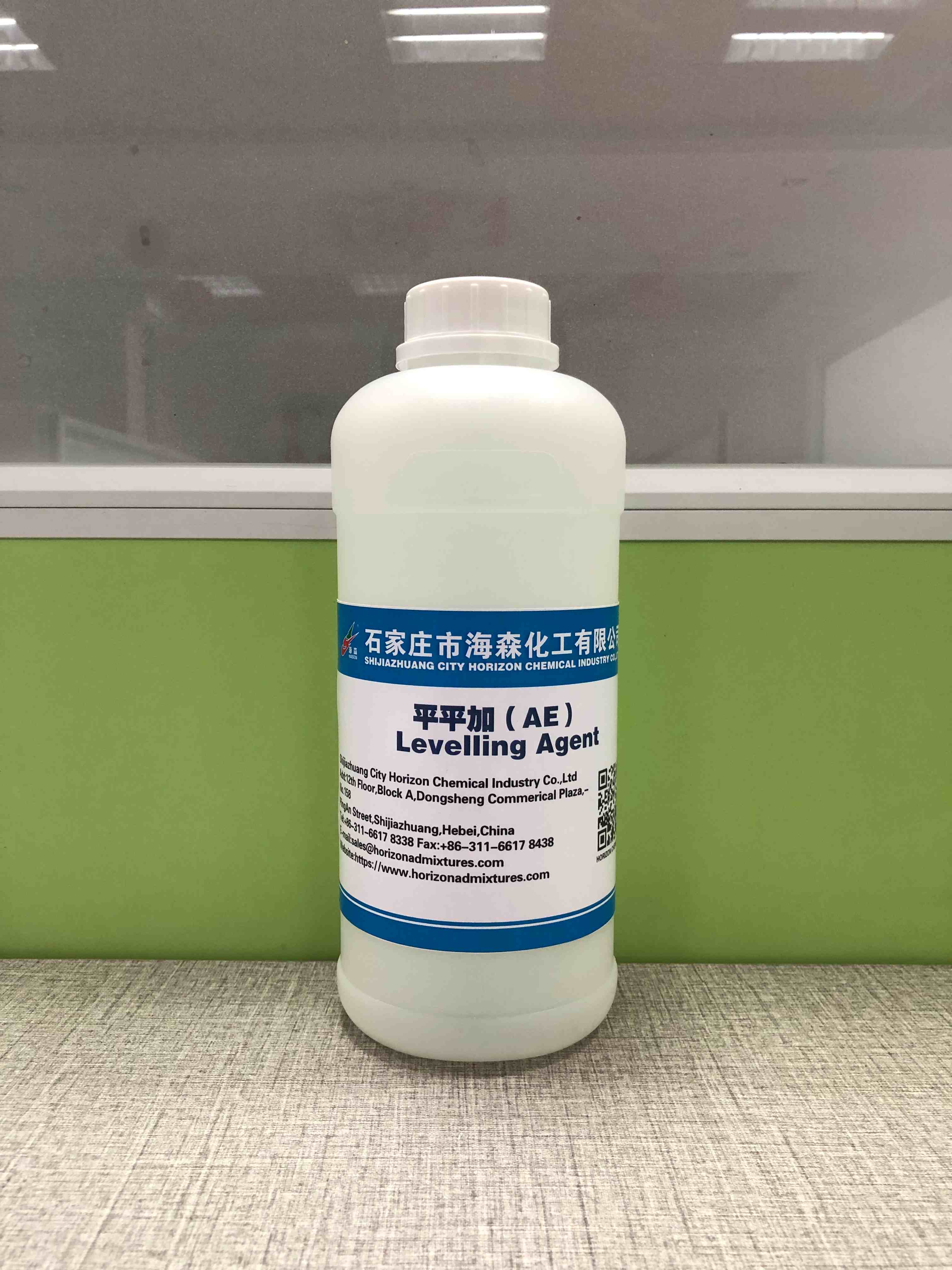
Elite formulators don’t just hunt for a product that smooths out coatings—they seek a levelling partner who grasps the rhythm of their entire system. The right collaborator digs into rheology curves, resin compatibilities, and application nuances with a curiosity that feels less like a sales call and more like a joint deep dive. They know that surface tension mismatches aren’t just textbook problems; they’re daily puzzles that demand tailored, sometimes unconventional, approaches.
Beyond raw chemistry, a levelling partner earns trust by sweating the small stuff: batch-to-batch consistency that holds even under temperature swings, responsiveness when a defect pattern changes mid-run, and a willingness to bench test until the film flows exactly right. The best ones treat your formulation like their own, showing up with data, not just datasheets, and pivoting quickly when a promising additive doesn’t mesh with the binder or pigment grind. They’re not just supplying a molecule; they’re plugging into your creative loop.
Ultimately, top formulators look for a partner who balances technical firepower with a genuine hunger to solve problems that haven’t even surfaced yet. It’s about having someone in your corner who views levelling not as a one-step fix, but as a dynamic interplay between substrate, application method, and final aesthetics—someone who’ll quietly optimize viscosity recovery or edge pull without ever losing sight of your coating’s personality.
Beyond the Data Sheet: Real-World Performance Clues
Spec sheets love to flaunt numbers—clock speeds, core counts, cache sizes—but real performance is a messy, nuanced affair. A chip that benchmarks beautifully in a lab can stumble when it's dropped into a crowded server rack with uneven thermal loads. I've seen systems where a modest processor handily outperforms a flagship one simply because the board's power delivery wasn't choked to death by poorly designed VRM cooling. The lesson? Paper specs only tell you what a component might do in isolation, not what it will do when it's sweating inside your actual build.
Then there's the software angle, often the silent saboteur. A firmware update can make or break I/O throughput, and an operating system's scheduler might not even know how to spread threads across the new hybrid architecture. I remember a storage array that crawled until we discovered the default driver was queuing commands in a way that made sense for spinning rust but was pure poison for NVMe. These aren't flaws you'll find in any data sheet; they're ghosts that haunt you only after the hardware is bolted in. The real clues live in community forums, logged minutes from field engineers, and the scar tissue of early adopters who learned the hard way.
Navigating the Shift to Sustainable, High-Efficiency Additives
The push toward greener, high-performance additives isn't just a trend—it's a necessity. Companies now face the reality that traditional chemistries, while effective, often carry a heavy environmental toll. The challenge lies in replacing them without sacrificing functionality or breaking the bank. Early adopters are finding that success comes not from a single silver bullet, but from rethinking entire formulations. It means looking beyond legacy performance metrics and embracing life-cycle thinking, where the additive's end-of-life behavior matters as much as its initial impact.
One overlooked aspect is the supply chain itself. Sourcing bio-based or recycled feedstocks brings a new set of logistical hurdles, from inconsistent quality to higher upfront costs. Yet, those who invest in robust supplier partnerships and advanced purification techniques are discovering that these hurdles become barriers to entry for competitors. The shift also demands a closer dialogue between R&D and end-users, as the performance of sustainable additives can be application-specific, often performing exceptionally well in niches where conventional options falter.
Ultimately, navigating this transition is about balancing pragmatism with ambition. Incremental improvements, like blending small percentages of high-efficiency additives into existing lines, can serve as stepping stones rather than waiting for a perfect full-scale overhaul. The real winners will be those who treat this not as a compliance exercise, but as an innovation driver that redefines what a product can do—and what it stands for.
Solving Persistent Surface Defects Through Supplier Collaboration
Surface defects on injection-molded parts often resist standard fixes, tracing back to subtle material or process mismatches that only the supplier fully understands. Rather than cycling through in-house trial and error, we initiated a joint analysis with the resin supplier, opening a direct channel to their technical team. They examined our molding parameters alongside lot-specific material data, quickly spotting an inconsistency in the additive dispersion that caused sporadic streaking. This partnership turned a recurring quality headache into a targeted adjustment—something we could never have isolated on our own.
The depth of insight came from the supplier’s willingness to share proprietary knowledge about additive interactions under certain temperature profiles. Together, we ran controlled trials at their facility, adjusting screw speed and back pressure to accommodate a narrower processing window. The result was not just a blemish-free surface but also a documented material handling protocol that prevents reoccurrence. This level of collaboration blurred the line between buyer and seller, creating a shared investment in the product’s final appearance.
Sustaining the improvement meant embedding the supplier’s input into our preventive workflow. We now include their thermal imaging analysis during first-article inspections, catching anisotropy early. Regular joint audits of incoming lots have become standard, not extraordinary. What started as a frustrating defect evolved into a model for how intimate supplier involvement can solve seemingly intractable cosmetic issues—and build a relationship that pays dividends well beyond the production line.
Future-Proofing Coatings with Next-Gen Levelling Technologies
As coating formulations become more complex, traditional levelling agents often struggle to keep up with demands for faster application, lower VOCs, and flawless finishes on challenging substrates. The newest generation of levelling technologies addresses these pain points through molecular architectures that adapt to changing shear conditions during spray, dip, or roll coating. By dynamically controlling surface tension gradients while maintaining intercoat adhesion, these additives eliminate common defects like orange peel and cratering without compromising recoatability—a long-standing trade-off that earlier products could never quite resolve.
What sets these systems apart is their ability to self-organize at the air–liquid interface within milliseconds of application, creating a uniform, high-slip layer that persists until the film cures. This rapid surface remodeling works equally well in waterborne, high-solids, and UV-curable formulations, making it a versatile tool for formulators under pressure to meet tightening environmental regulations. Early adopters in automotive OEM and industrial wood coatings report a significant drop in rejected parts and rework costs, proving that the right levelling technology isn't just a cosmetic upgrade—it's a direct contributor to operational efficiency.
Looking further ahead, the integration of real-time rheology modifiers and self-healing levelling mechanisms signals a shift toward smart coatings that correct their own application flaws before the film sets. Instead of relying on trial-and-error additive packages, manufacturers can leverage data-driven formulation platforms that predict flow behavior on complex geometries. This convergence of material science and process analytics is redefining what durability means, shifting the focus from merely surviving harsh environments to actively improving application reliability and long-term aesthetic retention.
FAQ
A levelling agent reduces surface tension to promote uniform flow and minimize defects like orange peel or cratering, ensuring the coating spreads evenly before curing.
The supplier’s expertise often translates into tailored solutions, consistent product quality, and reliable technical support, which directly impacts coating performance and production efficiency.
It enhances adhesion and film integrity by minimizing internal stresses and surface irregularities, reducing vulnerability to corrosion, weathering, and mechanical wear over time.
Evidence comes from their ability to recommend products based on specific resin systems, application methods, and curing conditions, along with practical guidance on dosage and compatibility.
They enable higher transfer efficiency, lower VOC content through better flow at reduced film thickness, and longer-lasting finishes that extend maintenance cycles.
Understanding substrate energy helps the supplier suggest levelling agents that improve wetting and adhesion, preventing issues like crawling or dewetting on low-energy surfaces.
Conclusion
Achieving flawless coating finishes depends on more than just selecting the right levelling agent; it requires a deep understanding of the chemistry that drives film formation. Top formulators prioritize suppliers who offer not only consistent product quality but also a nuanced grasp of polymer-solvent interactions and surface tension dynamics that prevent defects during drying. Beyond technical data sheets, the real proof lies in practical application tests that mimic actual production conditions, from edge crawling to orange peel. A reliable levelling agent partner combines formulation expertise with process insights, ensuring additives perform under varying humidity, temperature, and substrate conditions.
The shift toward sustainable, high-efficiency additives is reshaping supplier expectations, with formulators seeking low-VOC, bio-based options that maintain or improve performance. Persistent surface defects like craters or fisheyes often stem from complex interactions that demand close collaboration between formulators and suppliers to diagnose and resolve. Shared lab testing and joint problem-solving have become essential. Looking ahead, next-generation levelling technologies—such as reactive additives and adaptive rheology modifiers—promise to future-proof coatings against evolving regulatory and performance demands. By choosing a supplier invested in innovation and sustainability, formulators can secure superior coating performance that meets both current challenges and tomorrow's standards.
Contact Us
Contact Person: Sam Lee
Email: [email protected]
Tel/WhatsApp: 86-311-6617 8338
Website: https://www.horizonadmixtures.com/