

NFC Label Manufacturing Concerns: Overcoming Quality and Durability Challenges
2026-05-15
NFC technology powers everything from contactless payments to smart packaging, but behind every seamless tap lies a critical challenge: manufacturing labels that can withstand real-world abuse. From extreme temperatures to physical wear, quality and durability issues often derail even the most promising IoT deployments. At OSRFID, we’ve seen firsthand how cutting corners in label production leads to costly failures. So what does it actually take to produce NFC labels that don’t just work today, but keep performing years down the line? Let’s dig into the hidden manufacturing hurdles and the smart engineering that overcomes them.
Where Most NFC Labels Fail: Material Choices That Backfire
NFC tags might all look the same at a glance, but the materials hiding beneath the surface can turn a simple tap into a frustrating dead end. Many manufacturers lean on cheap PET inlays and generic adhesives that buckle the moment they face moisture, metal, or even a mildly uneven surface. The result? Labels that peel, crack, or simply stop responding—leaving users tapping their phone against what feels like a piece of dead plastic.
The real trouble starts when these tags are placed on metal objects or curved containers, where standard ferrite sheets are either too thin or completely absent. Without proper shielding, the electromagnetic field from a phone can’t reach the chip, leading to persistent read failures. Equally damaging are labels built with low-grade face stock that yellows under UV light or smears after a few passes through a supply chain. What was meant to be a durable product tracker becomes an eyesore that undermines the brand it was supposed to elevate.
Choosing the right materials isn’t just a technical checkbox—it’s the difference between a label that performs for years and one that fails when it matters most. On-metal tags need tuned ferrite backing to maintain read range, while labels destined for outdoor use demand UV-resistant films and industrial-strength adhesives. Even the chip itself has to be matched to the environment: some fail in freezing temperatures, others can’t handle the constant vibration of machinery. When these choices are overlooked, the NFC label doesn’t just underperform—it actively backfires, eroding trust in the very technology it’s built on.
Adhesives That Let Go: The Overlooked Durability Factor
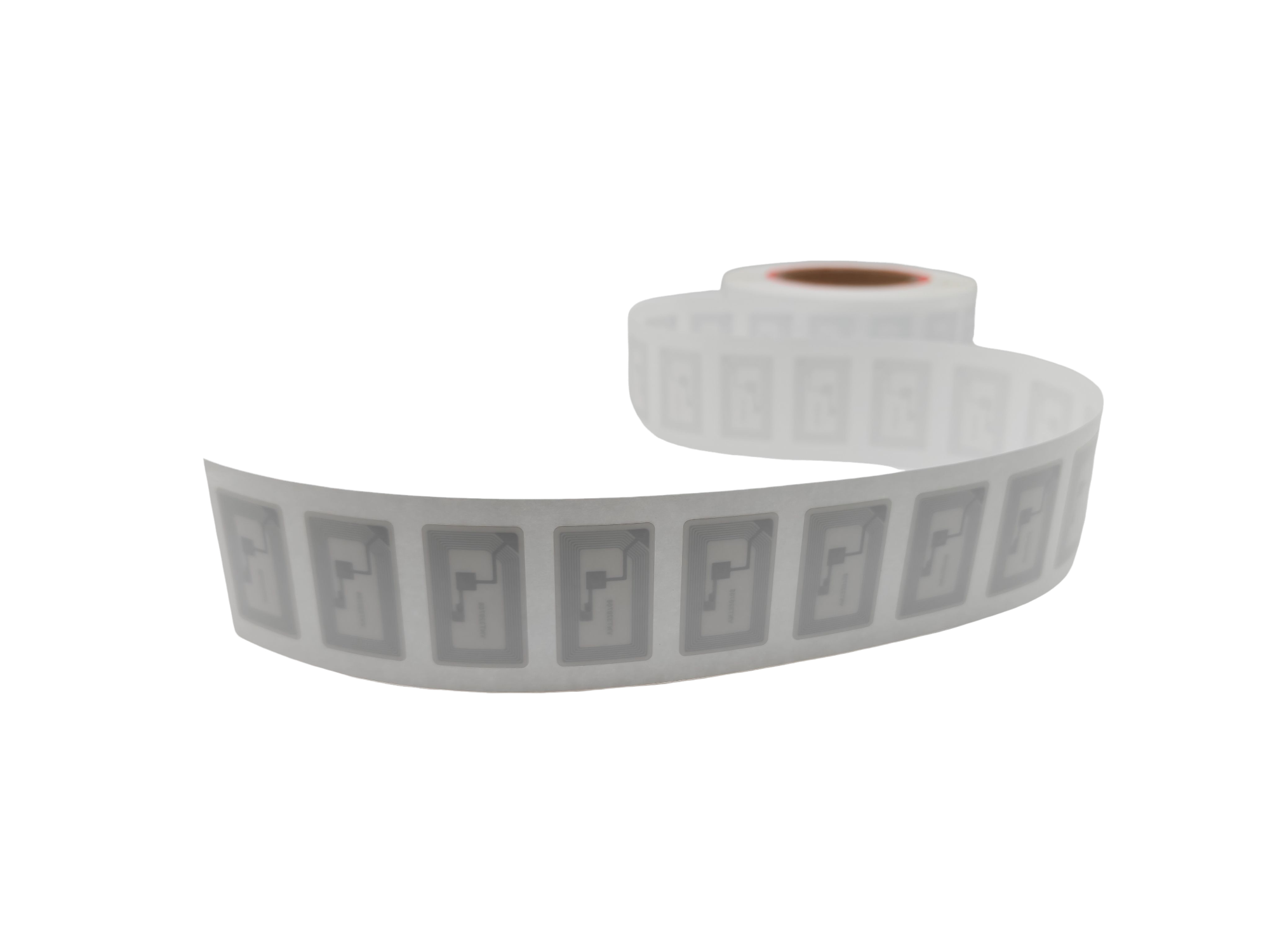
Most adhesives are designed for permanence, but a growing class of temporary bonding solutions flips that logic on its head. These are not your average sticky notes or low-tack tapes; they are engineered to hold strong under load, then release cleanly on demand without damaging substrates. The overlooked part? Durability isn't just about how long a bond lasts—it’s also about how gracefully it lets go. In industries ranging from electronics assembly to automotive repair, the ability to dismantle without residue or stress marks is becoming a quiet revolution.
What makes these adhesives durable yet detachable often lies in clever material science. Some use thermally expandable microspheres that rupture or soften at a specific temperature, breaking the bond from within. Others rely on phase-change polymers that shift from rigid to fluid when triggered by heat, UV light, or electric current. The real challenge isn’t just triggering the release, but ensuring the adhesive remains stable through countless thermal cycles, humidity swings, and mechanical vibrations before that intentional debonding moment. Far too many designers ignore how many cycles a “releasable” bond can actually survive without creeping or fatigue, which leads to failures in the field.
The nuance that often gets missed is that durability testing for these materials must capture two competing demands: the strength to stay put during use, and the predictability to release without leaving a trace—repeatedly, if needed. Standard peel or lap-shear tests don’t tell the full story. You need to know how the adhesive ages after partial exposure to cleaning solvents, how it behaves under mixed-mode loading, and whether the release mechanism quietly degrades over time. A bond that still “lets go” after 10,000 cycles but leaves a gummy residue behind isn’t truly durable. It’s that edge case—where longevity meets truly clean reversibility—that separates the breakthroughs from the also-rans.
Printing Precision and Antenna Consistency: Getting It Right
Achieving reliable antenna performance starts with flawless printing precision. Even microscopic deviations in conductive traces can shift resonant frequencies, causing impedance mismatches that degrade signal integrity. To get it right, manufacturers must tightly control ink deposition, substrate handling, and curing conditions—ensuring each antenna element reproduces the exact geometry required for consistent radiation patterns.
Consistency across production batches is equally critical. Without rigorous process validation, two supposedly identical antennas can behave differently, leading to erratic device connectivity. By adopting high-resolution inspection systems and maintaining stable environmental parameters, fabricators can detect drift early and lock in repeatability. This discipline ensures that every unit maintains the specified gain, bandwidth, and radiation efficiency—cornerstones of a finely tuned RF product.
Surviving the Elements: Stress Tests That Reveal Weak Labels
No label looks forward to a downpour, blistering sun, or an accidental brush with a solvent. But these harsh encounters separate the durable from the disposable. Our stress tests mimic exactly that—real-world abuse you’d rather not think about—because a label that fades, peels, or smears isn’t just ugly; it’s a liability. We don’t baby samples. Instead, we blast them with pressurized water, bake them under UV lamps, and rub them with industrial cleaners until they crack or confess their limits.
It’s the quiet failures that cost you. A label that looks fine indoors can ghost away after a month of sunlight, taking critical safety warnings or branding with it. We’ve seen adhesive that turns to dust in freezing temperatures and inks that bleed into indecipherable pools when hit with oil. That’s why our bench tests go beyond the standard playbook: we freeze, thaw, twist, and soak until we know exactly where the bond breaks. If a label survives 500 hours of salt spray without curling, it earns its place on your product.
What sets this testing apart is its honesty. There’s no room for generous interpretations or wishful thinking when you’re scrubbing the same barcode for the twentieth time with a scouring pad soaked in acid. The data we share isn’t just pass/fail—it’s a narrative of weakness: the exact temperature where the adhesive softens, the solvent that dims the print, the humidity that lifts the edge. Armed with that, you don’t just choose a label; you choose one that’s already met its worst day.
Metal Interference Fixes Without Killing Performance
Designing around metal interference often feels like a trade-off between shielding effectiveness and signal speed, but real-world fixes rarely come down to simply adding more copper or switching to plastic. The trick lies in treating the metal as a functional part of the RF path rather than an obstacle. Instead of blanketing a module with conductive tape or relying on bulky ferrites, many teams now tune the metal itself—cutting precisely placed slots to shift resonance, using the chassis as a counterpoise, or deliberately creating capacitive gaps that turn a problematic sheet into a distributed filter. These methods redirect stray currents without introducing the insertion loss that kills throughput, keeping data rates high while bringing emissions into compliance.
Component placement drives a lot of these interference issues more than the metal around them. Keeping high-speed traces short isn’t enough if the return current gets funneled through a noisy ground plane or forced to take a long detour around a mounting hole. A more effective approach is to shape the reference layers so they guide return currents right under the signal, even when the physical enclosure wants to break that path. In some designs, this means carving out a clear image plane on an inner layer, while in others it involves deliberately stitching the PCB ground to the metalwork with multiple low-inductance connections. The result is a system where the enclosure becomes an extension of the board’s ground, suppressing radiated noise without choking off the signals.
Sometimes the interference isn’t from the device’s own metal but from nearby conductive surfaces that warp antenna patterns or reflect emissions. Rather than accepting a range reduction or bumping up transmit power, engineers can use the environment to their advantage. Directional antennas, phased-array techniques, or even intentional asymmetry in a ground plane can steer radiation away from problem spots. In tight consumer products, where metal casings are unavoidable, adding a sliver of low-loss material as a window or optimizing the feed point relative to the edge turns what looked like a solid shield into an efficient radiator. These tricks maintain sensitivity and range without the usual battery drain, proving that a metallic design doesn’t have to mean weak wireless performance.
Scaling Production Without Compromising Long-Term Reliability
Ramping up output often triggers a quiet trade-off: short-term speed versus the kind of durability that keeps customers returning years later. What’s easily overlooked is that reliability isn’t a fixed trait you either have or lose—it’s a design parameter that can be baked into scaling decisions from the start. By treating reliability metrics as non-negotiable constraints rather than afterthoughts, teams discover that faster production doesn’t have to mean cutting corners. It simply forces clearer priorities and smarter automation of the right tests.
One of the most effective shifts is rethinking supplier relationships. Instead of chasing the lowest bid and then firefighting quality spills later, mature operations invest in co-development with key vendors. They share reliability targets openly and build feedback loops that catch drift before it becomes a field failure. This collaborative approach turns the supply chain into an active layer of defense, not a source of hidden risk. When a process doubles in volume, the partners are ready because they’ve been part of the growth conversation all along.
Crucially, internal culture plays an outsized role. When engineers and line operators are empowered to pause a line for a potential integrity issue—without fear of reprimand—the organization builds a reflex against compromise. This cultural safety net, combined with rigorous but practical in-line monitoring, makes scaling a controlled expansion of a proven system rather than a gamble. The result isn’t just more units; it’s more units that earn trust over time, exactly the kind that turns first-time buyers into loyal advocates.
FAQ
Durability hinges on antenna material fatigue, moisture ingress through adhesives, and substrate resistance to tearing or yellowing. Frequent bending or exposure to chemicals accelerates wear, especially in flexible packaging.
Precision in antenna etching and tuning is key. Even slight variations in conductive trace width or dielectric thickness can shift resonance. Automated optical inspection and vector network analysis per batch help catch deviations early.
Corrosion of aluminum or copper antennas, adhesive breakdown from UV or temperature swings, and delamination between layers are common culprits. Without proper encapsulation, humidity seeps in and disrupts the radio frequency field.
Accelerated aging under UV, thermal cycling from -20°C to +70°C, and salt spray tests mimic real-world stress. Coupling these with periodic functional checks reveals how quickly read range degrades.
Rigid substrates like PET provide stable dielectric properties, but paper-based tags often suffer from moisture absorption that detunes the antenna. Flexible substrates need careful matching to avoid cracking of the conductive layer during use.
Yes, if the lamination creates a hermetic seal. Acrylic or urethane films block moisture and oxygen, while pressure-sensitive adhesives with high shear strength prevent edge lifting. This is critical for outdoor industrial labels.
Inline electrical testing immediately after antenna printing catches shorts or opens. Statistical process control on bond strength and visual inspection for alignment errors reduce scrap. Pre-lamination conditioning of materials also minimizes curl and registration drift.
Conclusion
NFC label manufacturing is plagued by subtle material missteps that quietly undermine performance long before a tag fails outright. Choosing the wrong substrate, such as cheap PET that warps under heat or paper facestocks that absorb moisture, leads to antenna fractures and intermittent reads in the field. But the trouble runs deeper: adhesives are often an afterthought, yet they dictate whether a label bonds durably to curved, low-energy surfaces or peels away with the first temperature swing. Without rigorous shear and peel testing across the intended temperature range, batches can pass initial QC only to fail months later on refrigerated assets or outdoor equipment. Printing precision and antenna consistency add another layer of complexity—minor registration errors in screen or flexo printing create impedance mismatches that shrink read range, while inconsistent ink deposit thickness yields tags that work on some readers but not others. Manufacturers who overlook in-line electrical testing of every antenna risk shipping a percentage of dead labels, eroding trust silently.
Real-world survival demands more than lab validation: labels must endure UV exposure, salt spray, and repeated impact without delaminating or losing resonance. Accelerated aging tests often expose weak points that accelerated life testing misses, like ribbon ink fading on sun-baked assets or chip bonds corroding in humid industrial environments. The metal interference problem is equally delicate—adding a thick ferrite layer kills performance if not tuned precisely to the antenna’s inductance, so successful designs integrate thin, flexible absorbers that balance isolation with minimal Q-factor degradation. Scaling this into production without compromising reliability hinges on automated optical and RF inspection at full line speed, coupled with batch traceability down to raw material lots. The winning approach treats every manufacturing variable—substrate, adhesive, printing, shielding—as an interconnected system, not a checklist, ensuring that labels delivered today perform identically to the ones qualified six months ago.
Contact Us
Contact Person: Esme Mo
Email: [email protected]
Tel/WhatsApp: 0086 191 2931 7837
Website: https://www.osrfidglobal.com/