

Why Yushui Village Deserves a Stop on Your Yunnan Trip
2026-11-18
Yunnan itineraries tend to sprint from Lijiang's old town to the nearest mountain view, and somewhere in between, Yushui Village gets reduced to a name on a map. That's a mistake. Jade Water Village sits over spring water that locals still treat as sacred, and its quiet lanes carry more of the Naxi story than places with far longer queues. If your trip needs a stop that feels alive rather than exhibited, this is the one worth making room for.
The Water Arrives Long Before the First Guesthouse
Before there was a door to knock on or a bed to claim, the water had already made its introductions. It moves under the old footbridge with the low, unhurried sound of gravel being turned in a slow current. By the time you notice the first guesthouse sign, you have crossed three small streams, passed a mossy sluice, and learned the particular green of the banks that flood each spring.
The village grew around the water, not the other way round. Guesthouses simply followed the path the river had worn into the valley. Some rooms still face the narrow channel where morning mist gathers before anyone lights a kitchen stove. If you wake early enough, you might hear the river before the bread ovens, before the church bell, before any human voice.
That arrival stays with you. A map may tell you the first building sits two hundred metres from the road, but the water starts telling a longer story at the bend by the old walnut tree. Long before a host hands over a key, the landscape has already given you a room without walls.
Stone Lanes Still Belong to the People Who Live Here
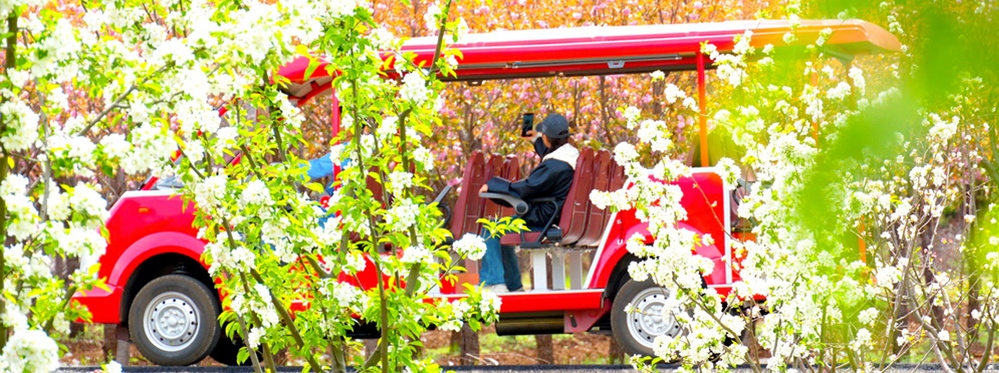
The cobblestones underfoot don't ask for attention the way a monument does. They dip where roots have pushed up from beneath, hold shallow pools after rain, and carry the scuffs of generations who have walked their dogs, dragged groceries, or stumbled home late. These lanes were never designed as a stage for visitors. They simply work, the way a well-worn strap works on a favorite bag. You can feel the difference in the uneven rhythm of walking here: a slight hesitation before a loose stone, a subconscious step around a familiar dip that only someone local would know.
People still hang laundry across the narrow gaps, and the smell of garlic and oil drifts out at the same hour every evening. A child's chalk drawing fades at the corner where the trash bins wait. This is not a place frozen for postcards, but one that shifts with the seasons of its residents. The stones don't separate private from public so much as they hold both together, allowing a doorstep to function as a chair, a bike rack, a cat's sunning spot. No plaque marks the history here because the history is still being made each morning when someone sweeps the dust back into the cracks.
What remains is not a curated version of old charm, but the stubborn everydayness of people who have no reason to leave. The lane belongs to them not through ownership papers, but through the small, repeated acts of tending and using. You might walk through and think it quiet, but it is actually full of signals: a window left open at noon, a pair of shoes outside a door, a pot of basil moved to catch the last light. These are the quiet claims of belonging that no redevelopment plan can easily erase.
Jade Dragon Snow Mountain, Seen Over Rooftops Not Railings
From the upper floor of a guesthouse in Shuhe, the mountain appears in the gap between tiled roofs and a water tank, not through the neat frame of a viewing platform. The old town ridgeline cuts across the foreground: clay tiles, a few rusted TV aerials, a blue plastic tarp lifting at one corner. Above that, Jade Dragon Snow Mountain looks less like a scenic attraction and more like weather that has forgotten to move. The snowfields sit high and narrow, holding light long after the town sinks into shadow.
Standing at a railing gives you an unobstructed view, but it also gives you the crowd's expectation of what to feel. From a rooftop, you hear the lane below—someone hosing down stones, a dog barking at a motorbike—and the mountain stays remote in a way a guardrail cannot frame. You notice the contrast between the warm, grimy edges of the town and the cold mineral silence of the peaks. That narrow band of laundry lines and stove smoke makes the summit look farther away and somehow more real.
Late in the afternoon, the snow turns the color of old porcelain, then briefly pink, while the roofs below go grey. It is the kind of view that does not photograph well because the foreground is messy and the mountain refuses to be the only subject. Maybe that is why it lingers: not the mountain alone, but the slope of a roof, a loose cable, and that white ridge balanced above ordinary mornings.
The Short Walks That End in a Different Kind of Quiet
The walk usually starts with the ordinary noise I have stopped noticing: a car idling two streets over, the scuff of my own shoes, someone's radio bleeding through a fence. Then I turn where the sidewalk gives out, or where the gravel path dips behind the old substation, and the sound doesn't vanish so much as it changes pitch. It becomes less like being surrounded and more like being set down.
What I find at the end is rarely a view worth photographing. Often it is just a clearing behind a row of brambles, a dry creek bed, or a patch of pine needles where the light comes in flat. But the quiet there has a different weight. It is not the hush of an empty room. It has small movements inside it: a jay working its way up a trunk, the soft click of dry seed pods, my own breathing finally audible to me. The noise never really left; it just stopped demanding to be first.
The short walk matters because it does not require a trailhead, a plan, or the right kind of weather. It can be taken between errands or after dinner, and the quiet it gives you can be carried back through the door. By the time I return, the traffic sounds are still there, but they sit outside me for a while instead of inside my chest. That small shift, repeated often enough, becomes its own kind of rest.
A Naxi Kitchen That Cooks with the Seasons
There is no fixed list of dishes on the wall. Instead, the cook steps out at dawn to see what the hills around Lijiang have pushed up overnight. A handful of tender bracken in spring, wild garlic chives after rain, young thorny shoots that taste like green almonds if they are picked before noon. The menu is decided by the garden, the market and the weather, not the other way around.
Summer tilts toward mushrooms - matsutake if the season is generous - cooked quickly in pork fat with green peppers and a little local bean paste. Autumn is when red chillies are strung under the eaves and vegetables are sliced thin and dried for the cold months. By winter, the kitchen turns inward: clay pots of dried wild vegetables, wind-cured ham, and the slow, smoky heat of a charcoal brazier.
This is ordinary Naxi cooking shaped by altitude and patience. It does not try to impress with technique or theory. It simply pays attention to what the season offers, and leaves the rest alone.
What Changes When the Last Tour Van Pulls Away
The silence arrives before the dust settles. You’ve spent months sharing a cramped van, cheap motel soap, and the same twelve jokes that stopped being funny in week two. Then the engine cuts off in your own driveway, and nobody reaches for a bag from the back. That first night, you reach for your phone to send a routing update to a group chat that has gone still. Your body still braces for motion, but the road has stopped asking for you.
What nobody warns you about is how the small rituals vanish. No more 4 a.m. gas station coffee poured by someone whose name you never learned. No more arguing over whose turn it is to carry the kick drum case. You stop checking the merch count, stop calculating miles per gallon, stop falling asleep against a window that rattles in exactly the same place. Home feels like a venue where the show ended early, and you’re the last one left on the floor with a roll of gaffer tape and no setlist.
But slowly, other things surface. You cook a meal that doesn’t come wrapped in foil. You sleep past noon without guilt. You hear your own thoughts again, not filtered through a PA system. The friendships either deepen into something that doesn’t need a tour itinerary to survive, or they loosen into a few scattered text messages. The road stays with you, but it changes shape—less a destination, more a background hum. You learn to miss it without needing to return.
FAQ
That depends on what you expect. If you want easy access and nightlife, this isn't the place. But if you don't mind a winding road and a bit of legwork, you'll find a village that still feels tied to the mountains. The draw isn't one famous sight. It's waking up to ridgelines, walking through meadows, and watching the light change on the peaks.
Most people start from Shangri-La or Lijiang, then make their way to Feilaisi or Xidang. From Xidang you can either hike in or take a local vehicle. The road has improved, but it's still slow. Give yourself a full day for transfers and the final stretch.
Late October to early November tends to be clear and dry, with autumn color in the trees. May and June bring wildflowers but also more rain. Winter is quiet and cold, and some guesthouses cut back services. Summer can be muddy, so it's less pleasant unless you don't mind wet trails.
Not for the shorter walks around the village. Those are manageable if you're reasonably fit. Longer routes like Ice Lake or Sacred Waterfall demand more stamina and time. Altitude can affect anyone, so it's smart to spend a day acclimatizing before pushing yourself.
Family-run guesthouses are the norm. Rooms are simple but usually warm enough. Meals tend to be home-cooked: yak meat, potatoes, barley, vegetables. Don't expect much variety, though a few places do serve decent coffee. Cash is useful because connectivity and card machines can be unreliable.
It's busier than it was ten years ago, especially during the October holiday and Chinese New Year. But on weekdays and in shoulder seasons it still eases off. Walk ten minutes beyond the main guesthouse strip and most of the crowd disappears.
Bring layers, a waterproof shell, sun protection, and shoes already broken in. Carry enough cash, toiletries, and any personal medications. A power bank helps because electricity can flicker. If you're hiking longer routes, snacks and a water filter or purification tablets are worth the space.
It hasn't been turned into a polished version of itself. You still see yaks in the lanes, prayer flags over rooftops, and locals going about daily life. The setting does a lot of the work: the village is hemmed in by high peaks, so even a short walk puts you in an entirely different kind of landscape.
Conclusion
Yushui Village does not rehearse its scenery for visitors. The water moving through the lanes was there long before the first guesthouse, and it still dictates the rhythm of the place more than any itinerary. Stone paths carry the weight of daily errands, not just camera straps. Looking up from a courtyard, Jade Dragon Snow Mountain appears above tiled rooftops and drying laundry—not across a ticketed viewing platform. It is this casual proximity that makes the village feel less like a stop and more like a brief invitation into a lived-in landscape.
The slower routines are the real attraction. A short walk ends not at a marked overlook but in a kind of quiet that belongs to the village itself—irrigation channels murmuring, wooden doors half-open, a Naxi kitchen adjusting its cooking to whatever is in season rather than a fixed menu. After the last tour van pulls away, the lanes relax back into their ordinary selves. That is exactly when Yushui Village makes its quiet case: the best reason to visit is not a list of sights, but the chance to witness a place that continues on its own terms.
Contact Us
Contact Person: Changhong He
Email: [email protected]
Tel/WhatsApp: 086-0888-5190152
Website: https://vip.e-baixing.com/ysh